Cyber Crackdown: Google Tiplines and Cyber Police Net Etah Man Using AI to Morph Women's Photos
In a major victory for digital safety and law enforcement, the Cyber Police Station and Cyber Cell of Etah, Uttar Pradesh, have busted a dangerous deepfake and cybercrime operation. Law enforcement officials arrested a local businessman accused of using advanced Artificial Intelligence (AI) tools to create highly objectionable, morphed photographs of local girls and women.
During the targeted raid, detectives recovered two mobile devices containing thousands of explicit digital files. The operation was triggered by automated intelligence intercepts from the National Cyber Crime Reporting Portal (NCRP) and specialized global tech tiplines, exposing a dark web of digital exploitation.
Global Tech Collaboration: How Google Tiplines and the NCRP Unmasked the Suspect
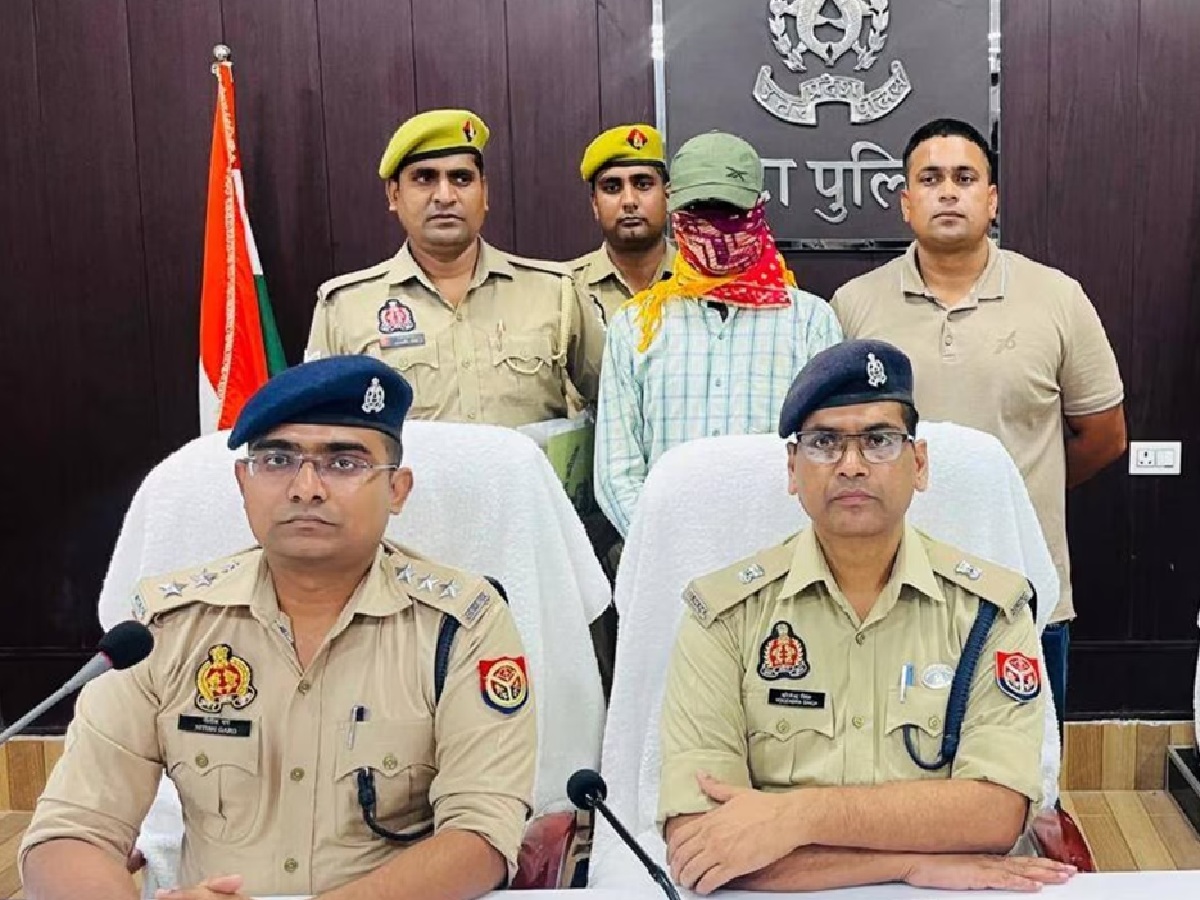
The breakthrough was achieved through a sophisticated web of digital intelligence. ASP Crime Yogendra Singh, briefing the media at Police Lines, revealed that the Director General of Police (DGP) received critical actionable intelligence routed through the NCRP portal in tandem with nine specialized cyber tiplines working in direct collaboration with Google. The automated systems flagged an anomaly indicating continuous uploads and creation of highly explicit, AI-manipulated content originating from the district.
Following a rapid cryptographic and IP-tracking investigation by the joint team of the Cyber Police Station and local Cyber Cells, authorities zeroed in on the suspect. The accused, identified as 42-year-old Mudit Gupta, son of Indresh Gupta and a resident of Bazar Kalan under the Jalesar Police Station jurisdiction, was intercepted and arrested by the police.
The Business Guise: Target Identification and Digital Footprints
Investigating officers revealed that Gupta operated a traditional bell-and-chime shop in the commercial hub of Jalesar. Local women and girls frequently visited his commercial establishment seeking local employment opportunities. Under the guise of routine interactions, the accused covertly captured their photographs, which he later processed using unauthorized AI photo-editing software to generate deepfake images.
Forensic analysts examining the two seized smartphones discovered thousands of explicit videos and nude photographs systematically organized across digital media folders and cloud storage. The suspect reportedly confessed to locking himself in his private room for over four hours every evening to run the automated manipulation software. Furthermore, digital data extraction proved that the suspect did not spare even his close relatives, having covertly taken and morphed photographs of a visiting family member. Fortunately, initial forensic tracking indicates that none of the morphed photos had been successfully leaked or gone viral on open public networks, though further digital audits remain ongoing.
Uncovering Past Horrors: Digital Evidence Reveals Historic Assault Case
The deep-dive digital forensics investigation uncovered a far more severe criminal profile than simple cyber harassment. As tech experts scanned the encrypted folders of the seized devices, they stumbled upon explicit evidence detailing the horrific sexual assault of an innocent five-year-old minor, which occurred approximately nine months ago.
Faced with the undeniable digital evidence, the accused broke down during interrogation and confessed to the brutal assault. The victim's family had remained completely unaware of the historical crime until the police uncovered the hidden data on the devices. Investigators are currently recording formal legal statements from the victim and her family to reinforce the prosecution's case.
Multiplying Identities: 11 Encrypted Email Accounts and Physical Evidence
To evade tracking by central security agencies, the accused utilized a network of 11 distinct email identities registered under completely different names to access various AI generation platforms and cloud networks.
Furthermore, police teams recovered specific items of clothing—two shirts worn by the accused during the timeline of the digital events—which have been logged alongside the digital footprints to create an airtight circumstantial case. The UP Cyber Police are processing the suspect under the Protection of Children from Sexual Offences (POCSO) Act, the Information Technology (IT) Act, and relevant sections of the Bharatiya Nyaya Sanhita (BNS) as legal proceedings move forward.