







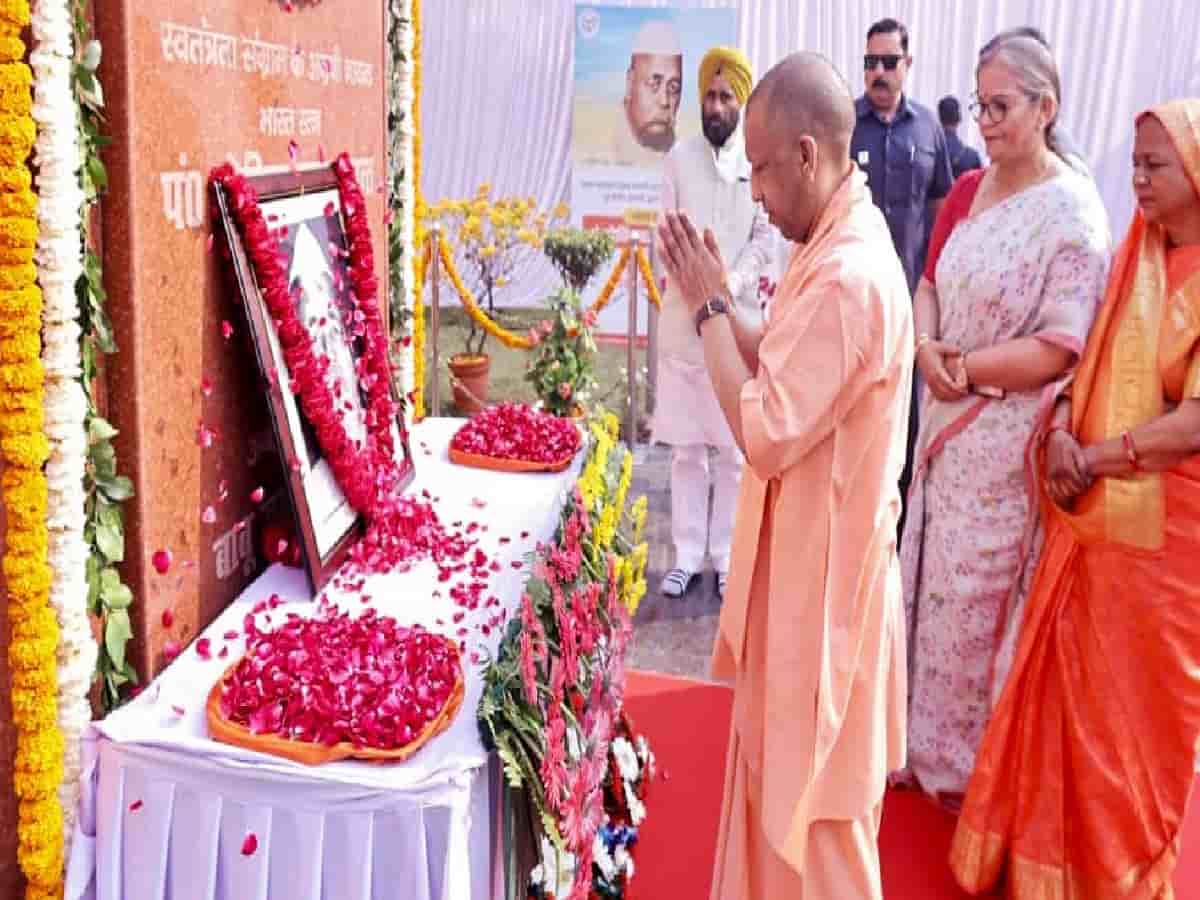
CM Yogi Honors Pandit Govind Ballabh Pant on 139th Birth Anniversary
Marking the 139th birth anniversary of Bharat Ratna Pandit Govind Ballabh Pant, Uttar Pradesh Chief Minister Yogi Adityanath offered floral tributes at his memorial statue in Lucknow. Addressing state dignitaries, historians, and citizens, the Chief Minister recalled the monumental legacy of the legendary freedom fighter, eminent jurist, former Union Home Minister, and the founding Chief Minister of independent Uttar Pradesh. Speaking on behalf of the state government and its people, Yogi Adityanath emphasized that Pandit Pant’s visionary leadership laid the foundational administrative bedrock for India’s most populous state, bridging pre-independence patriotic resistance with modern democratic governance.
Defending Kakori Revolutionaries and Spearheading the Freedom Struggle
Pandit Govind Ballabh Pant combined deep legal acumen with unyielding patriotic zeal throughout the Indian independence movement. Following the historic 1925 Kakori train action orchestrated by the Hindustan Socialist Republican Association, Pant stepped forward as a dedicated defense advocate, courageously arguing the legal defense of brave revolutionaries against oppressive British Crown prosecutors. In 1937, he was elected Premier of the United Provinces, yet willingly relinquished his ministerial office to rejoin grassroots agitation when colonial authorities dragged India into World War II without public consent. His fearless leadership during the 1942 Quit India Movement led to prolonged imprisonment, underscoring his lifelong dedication to complete self-rule.
Pioneering Post-Independence Governance and Crucial Land Reforms
Upon India achieving independence in 1947, Pandit Pant took the oath as the first Chief Minister of Uttar Pradesh, governing an extensive territory that included modern-day Uttarakhand. Managing an immense, newly partitioned population facing severe economic disruption, he established high administrative benchmarks through disciplined public policy, educational expansion, and community welfare programs. His administration enacted pioneering land reforms, systematically dismantling oppressive agrarian zamindari exploitation to empower rural farmers and create an equitable foundation for long-term agricultural prosperity across the northern plains.
Resolving National Linguistic Disputes as Union Home Minister
Assuming the office of Union Home Minister of India in 1954, Pandit Pant brought diplomatic wisdom and steady resolve to fragile post-independence domestic politics. Facing fierce regional linguistic friction following the re-organization of Indian states, he deftly mediated complex disputes, defusing domestic tensions and preserving sovereign national unity. During his tenure, Pant championed the legal adoption and administrative establishment of Hindi as the nation's official language while honoring India's rich multilingual federal fabric. His enduring dedication to nation-building earned him the country's highest civilian honour, the Bharat Ratna, leaving an inspiring blueprint of selfless public service for future generations.