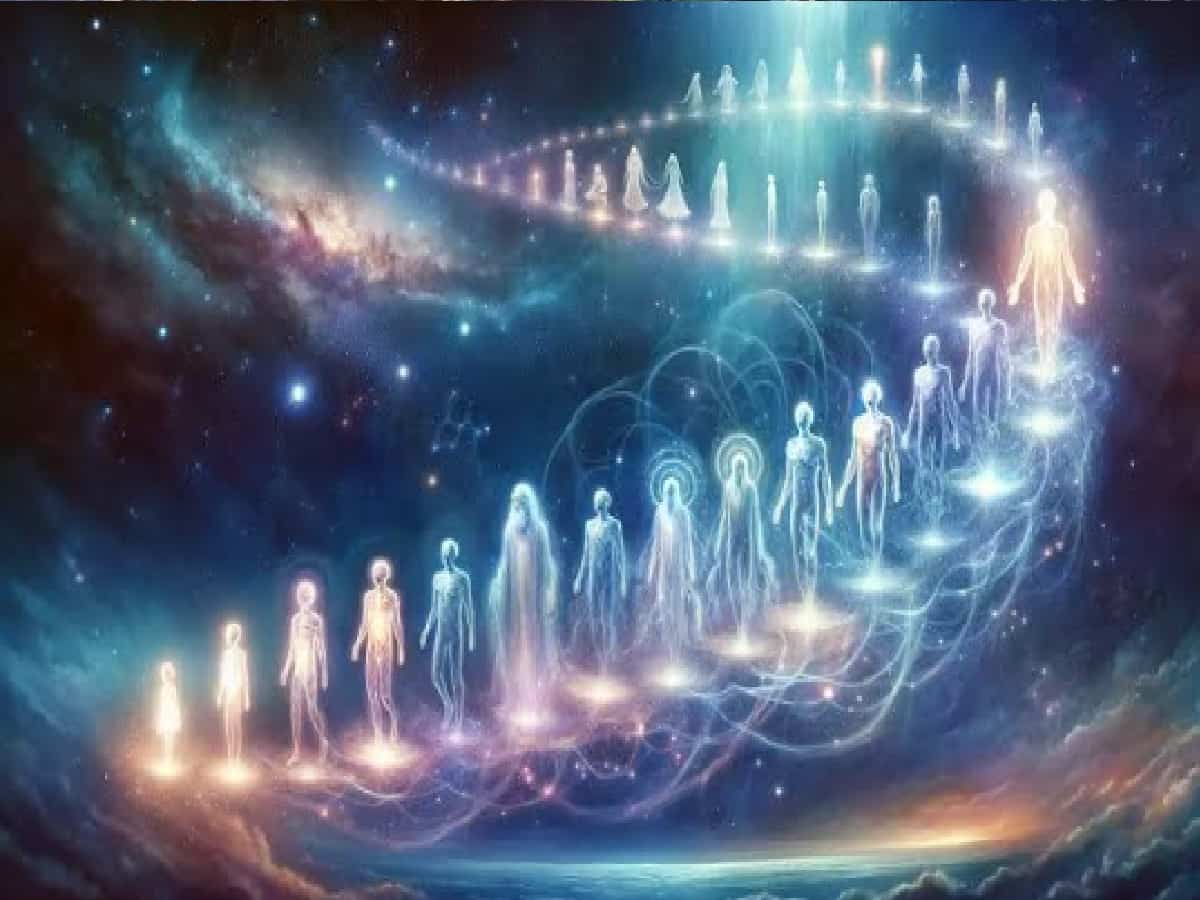
Soul’s Journey After Death: How Karma and Last Thoughts Determine Your Next Birth According to the Bhagavad Gita
In the eternal journey of human existence, one of the most profound questions centers on what happens to the soul after physical death. Do we return as humans, or are we reborn into other species? According to sacred Hindu scriptures, particularly the Bhagavad Gita, death is not the end of consciousness, but merely a transition. The soul sheds its physical vessel and takes on a new form governed entirely by its accumulated karma.
Karma Yoni vs. Bhog Yoni: The Power of Human Actions
Hindu philosophy categorizes existence into distinct realms. According to expert astrologer Chandresh Sharma of Astropatri, human life is designated as Karma Yoni (the realm of action), because it is the only state where an individual has the free will to shape their future destiny through conscious deeds. In contrast, other forms of existence are classified as Bhog Yoni (realms of experiencing past consequences).
As elders have long taught, a person's lifelong actions directly dictate their destination after death. Souls characterized by righteousness, charity, and virtue ascend to higher realms, while different levels of karma dictate varied forms of rebirth:
-
Divine or Gandharva Births: Individuals who lead lives defined by pure thoughts, selfless service, spirituality, and kindness may attain higher births among gods or celestial beings.
-
Return to Human Form: Those with mixed or average karma, retaining the fruits of virtuous acts, are reborn into human families, receiving another opportunity to progress spiritually.
-
Lower Species (Animals and Insects): Individuals driven by excessive tamasic actions, cruelty, violence, and selfishness are believed to take birth among animals, birds, or insects as the natural consequence of their past karma.
The Significance of the Final Moments and Thoughts
Beyond a lifetime of accumulated deeds, scriptural texts emphasize the critical importance of a person's state of mind at the moment of death. Chapter 8 of the Bhagavad Gita highlights that the thoughts and emotions occupying a person's consciousness during their final breaths heavily influence their next rebirth. Therefore, maintaining a pure, tranquil, and spiritually aligned mind throughout life is essential for steering future destiny.
Breaking the Cycle: The Ultimate Path to Moksha
While virtuous karma ensures higher births or repeated human lifetimes—such as those born into pious or yogic families described in verses 41-42 of Chapter 6 of the Gita—the ultimate goal of the soul remains Moksha (liberation). When an individual purifies their actions, dedicates themselves to self-realization, and detaches from worldly illusions, they break free from the eternal cycle of birth, death, and rebirth altogether.