Paryushan 2026: Is Jainism's Holiest Ten-Day Mahaparv Celebrated and What Is Its Spiritual Significance
Every religion across the globe honors unique traditions and festivals that mirror its core values, and Jainism holds its most sacred annual gathering during the Paryushan festival. Falling in the Hindu calendar month of Bhadrapada, which typically corresponds to August and September, this year the auspicious festival commences on September 8 and runs through September 15. Celebrated with deep devotion by both the Svetambara and Digambara sects, Paryushan is a transformative ten-day period dedicated entirely to spiritual contemplation, strict self-discipline, inner purification, and the supreme practice of universal forgiveness.
Historical Origins Rooted in Non-Violence and Monsoon Season
The historical roots of the Paryushan festival date back centuries to ancient India, long before modern infrastructure connected isolated rural communities whose livelihoods heavily relied on agriculture. Following the heavy monsoon rains and the harvest season, travel was restricted because flooded dirt roads teemed with newly born insects and microscopic organisms. Because Jainism places absolute, uncompromising emphasis on non-violence (Ahimsa), traveling or moving about extensively during the rainy season risked harming these tiny living beings. Consequently, monks and laypeople alike would halt their travels to stay in one place, using the monsoon retreat to focus intensely on self-purification, scriptural studies, and meditation.
Understanding the True Meaning of Paryushan
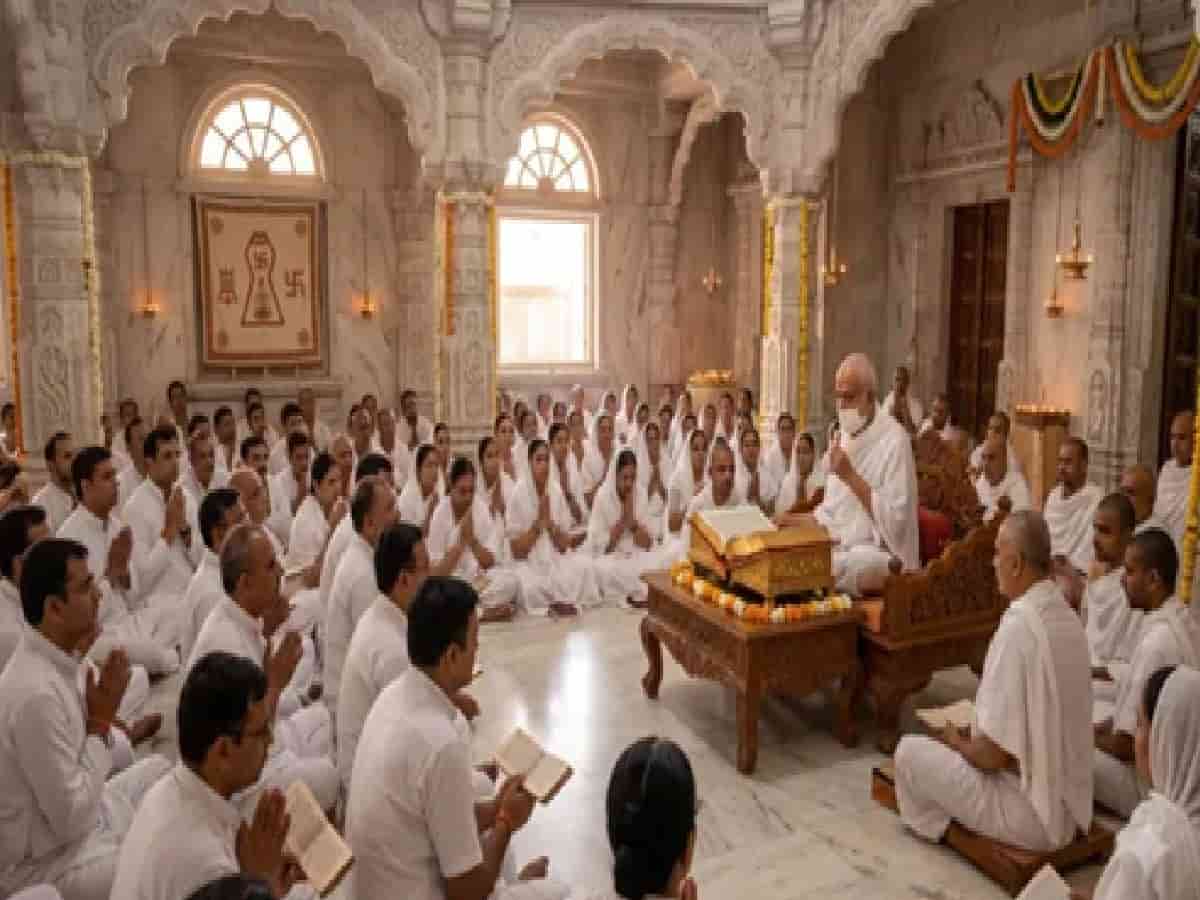
Even in contemporary times, Paryushan remains the single most important observance for Jains worldwide, lasting for eight to ten days depending on sectarian traditions. During this sacred window, followers actively minimize external worldly activities, avoid superficial ostentation, and refrain from visiting friends or relatives. Instead, they remain grounded at home or within community centers to immerse themselves in prayer and introspection. The term "Paryushan" is derived from two roots: "pari," meaning "in every way," and "ushan," meaning "to be established in one's true nature." Thus, the festival serves as a divine mechanism to help individuals anchor themselves firmly in their spiritual essence.
Spiritual Significance and Core Practices of the Mahaparv
Paryushan arrives once a year as a golden opportunity for anyone seeking to initiate or deepen an inner spiritual journey. The entire Jain community turns its collective focus inward toward the center of peace, practicing rigorous restraint, austerity, fasting, extended meditation, and the deep study of holy texts such as the Kalpa Sutra. A defining highlight of the festival is the practice of universal forgiveness, where followers seek and grant pardon from family, friends, and foes alike, wiping the slate clean of all grudges. Ultimately, Paryushan transcends ordinary celebrations, functioning as a grand festival of the soul that inspires sacrifice, penance, and absolute commitment to non-violence.