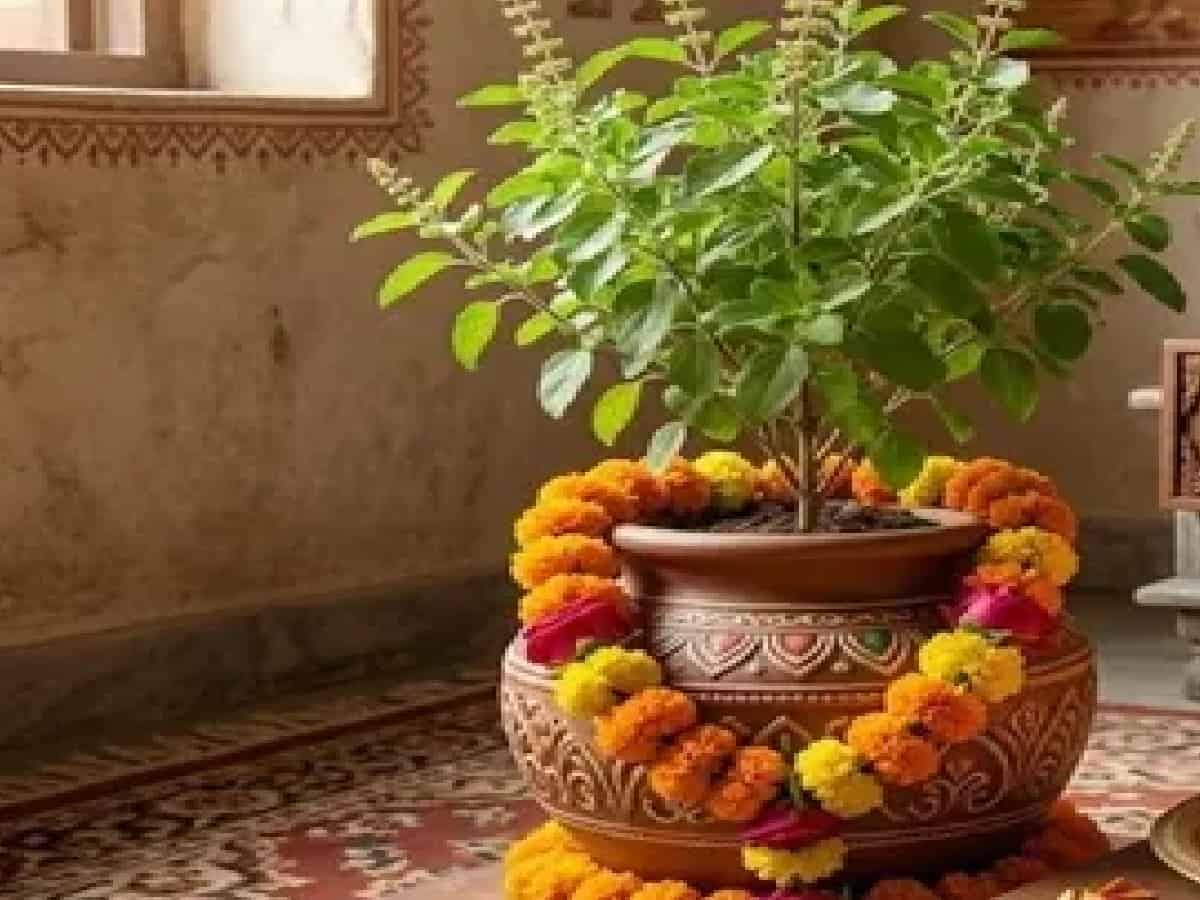
Incomplete Bhog Alert: Why Lord Vishnu Refuses Food Offerings Without a Tulsi Leaf
In Hindu spiritual worship, preparing and dedicating culinary offerings (bhog) represents one of the highest expressions of selfless devotion, surrender, and love toward the divine. Yet, generations of elders and classical scriptures underscore an essential spiritual mandate: any devotional feast presented to Lord Vishnu, Lord Krishna, or their various divine incarnations remains entirely unaccepted if it lacks a sacred Tulsi (holy basil) leaf. Scriptural texts explain that Tulsi Mata is venerated as an earthly manifestation of Goddess Lakshmi, the eternal consort of Lord Vishnu. Because of this divine connection, Vishnu Priya Tulsi serves as the spiritual seal on any consecrated meal; regardless of how rich, elaborate, or aromatic the halwa, kheer, fruits, or sweets may be, omitting a fresh Tulsi leaf means the offering fails to reach the deity, leaving the devotional worship incomplete.
The Sacred Protocol for Bhog: Purity in the Kitchen and Mantras of Consecration
Presenting food to God transcends ordinary culinary preparation, demanding absolute mental tranquility and external cleanliness. The kitchen must be maintained as a pure sanctuary, and the cook should meditate upon the deity throughout the entire cooking process with a peaceful, focused mind. A foundational rule dictates that under no circumstances should the food be smelled, sampled, or tasted prior to its formal presentation at the altar, ensuring its sanctity remains intact. Once cooked, the meal should be served in dedicated, spotless metal or clay vessels and positioned reverently before the deity's idol or portrait. Chanting sacred Vedic consecration verses such as "Om Pranaya Swaha" alongside the gentle ringing of a brass bell elevates the vibrational frequency of the meal, completing the sacred offering before the Lord.
Tamasic Exclusions and the Transformative Power of Distributing Prasadam
Canonical Vedic laws dictate that only strictly sattvic ingredients can enter the sacred cooking space. Onions, garlic, and heavily fermented substances are classified as tamasic—foods that foster lethargy and dull spiritual perception—and must never touch the deity's thali. Furthermore, offering stale or leftover food is prohibited, with the strict exception of ritually preserved ambrosias like Panchamrit; all standard dishes must be prepared fresh and served warm. Once Lord Vishnu accepts the devotion infused within the meal through the medium of the Tulsi leaf, the ordinary edible items undergo a spiritual alchemy, transforming into consecrated prasadam. Distributing this blessed nourishment among family members, guests, and the needy disperses divine grace, clearing negative household karmas and inviting enduring peace, health, and prosperity into the home.