India Sets Record Straight on FCRA Bill 2026: Myths vs. Facts
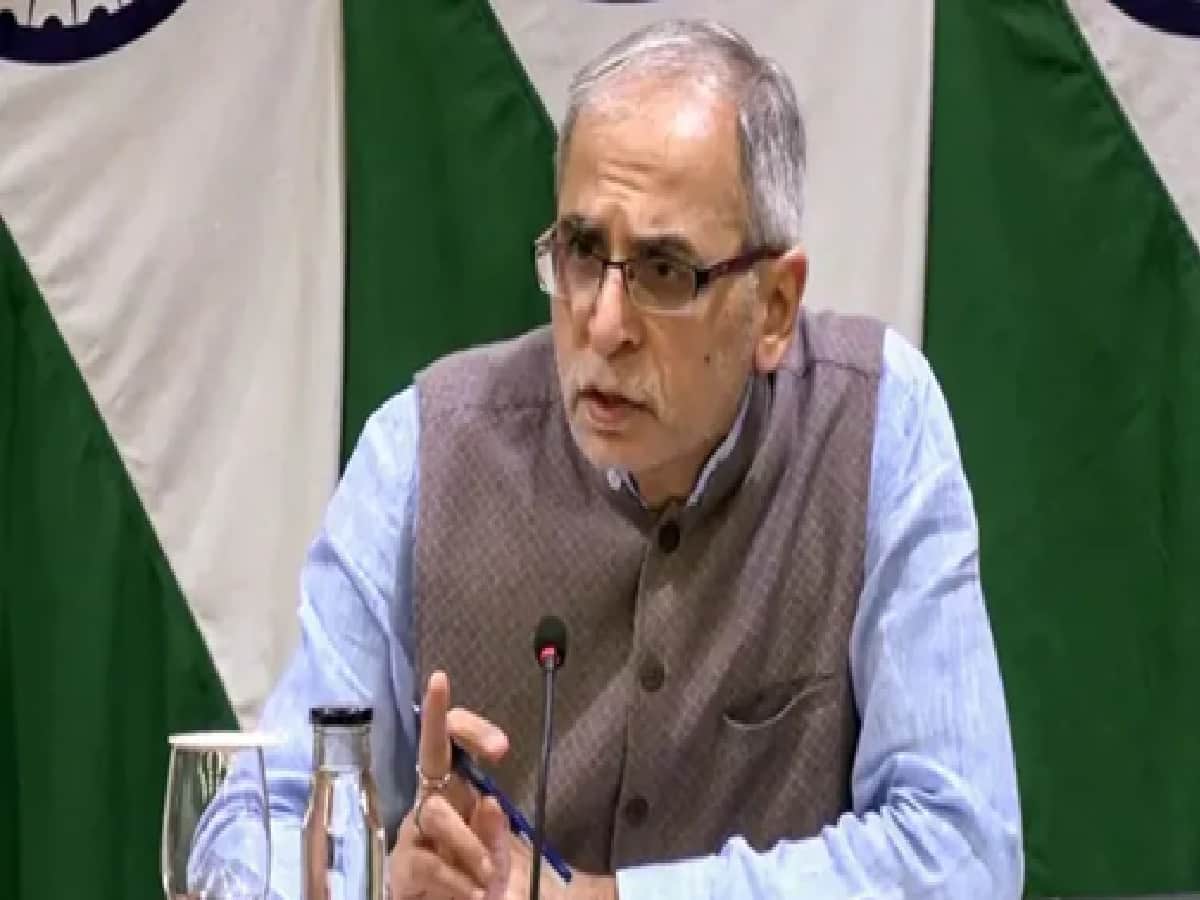
The introduction of the Foreign Contribution (Regulation) Amendment Bill (FCRA), 2026, has stirred vibrant political debates both domestically and internationally, drawing scrutiny from leaders across the United States and select European nations. In response to mounting external questions and misconceptions, New Delhi has launched a proactive global communication strategy. Reporting from New Delhi, Jaiprakash Ranjan highlights that the Indian government has designated Vinay Mohan Kwatra, India's Ambassador to the United States, to present an authoritative breakdown of the facts, marking an unprecedented and targeted effort to brief the international community on India's sovereign legislative measures.
Ambassador Vinay Mohan Kwatra Clears the Air on Global Misconceptions
Ambassador Kwatra firmly rejected claims that the legislative updates target any specific community or religious group. Placing India's actions into a broader international perspective, the envoy emphasized that regulating foreign financial flows is standard practice among advanced democracies. He pointed out that the United States enacted the Foreign Agents Registration Act (FARA) as early as 1938 and FATCA in 2010, while Australia introduced similar laws in 2018, Canada in 2024, and the United Kingdom in July 2025, with the European Union currently weighing comparable measures.
Debunking Five Core Myths Surrounding the 2026 FCRA Bill
To provide absolute clarity, the official briefing dismantled prevalent myths surrounding the new framework through ground realities and concrete statistical data:
-
Myth 1: India is enacting a new law to halt foreign aid to civil society.
-
Fact: Governing cross-border remittances into public and political spheres is a standard sovereign right aimed at safeguarding national security. India's original FCRA dates back to 1976, updated in 2010 and fortified in 2016, 2018, and 2020. The 2026 bill simply enhances transparency, ensures better governance, and establishes clear rules without blocking law-abiding NGOs from receiving funds for health, education, research, and disaster relief.
-
-
Myth 2: The FCRA severely impacts and restricts the functioning of NGOs.
-
Fact: Financial inflows are growing, not shrinking. Foreign contributions to registered bodies have surged from approximately $1.2 billion in 2010-11 to $2.67 billion in 2024-25. Out of over 3 million NGOs in India, only 14,450 hold FCRA registration, meaning the vast majority operate entirely outside the statute's scope. The law mandates three straightforward steps: register, receive money through prescribed banking channels, and disclose usage.
-
-
Myth 3: The law permits the arbitrary seizure of assets from religious charities and schools.
-
Fact: Provisions regarding assets created via foreign funds upon cancellation or surrender of registration have existed since 2010. The 2026 bill introduces a designated authority to safeguard those assets with a clear repatriation route; if an organization reinstates its registration, all assets and unused funds are fully returned. Furthermore, properties belonging to places of worship are securely transferred to another FCRA-registered entity of the same faith to guarantee uninterrupted continuity of worship.
-
-
Myth 4: The legislation specifically targets a particular religion or community.
-
Fact: The statute applies uniformly to all organizations regardless of religion, sect, or ideology. Faith-based welfare operations, religious education, and charitable initiatives across all religious communities remain fully eligible for foreign funding.
-
-
Myth 5: India is isolated in implementing such restrictive foreign funding laws.
-
Fact: As highlighted by diplomatic channels, major global partners including the US, Australia, Canada, the UK, and the EU enforce robust, comparable regulatory frameworks to monitor foreign influence within their borders.
-