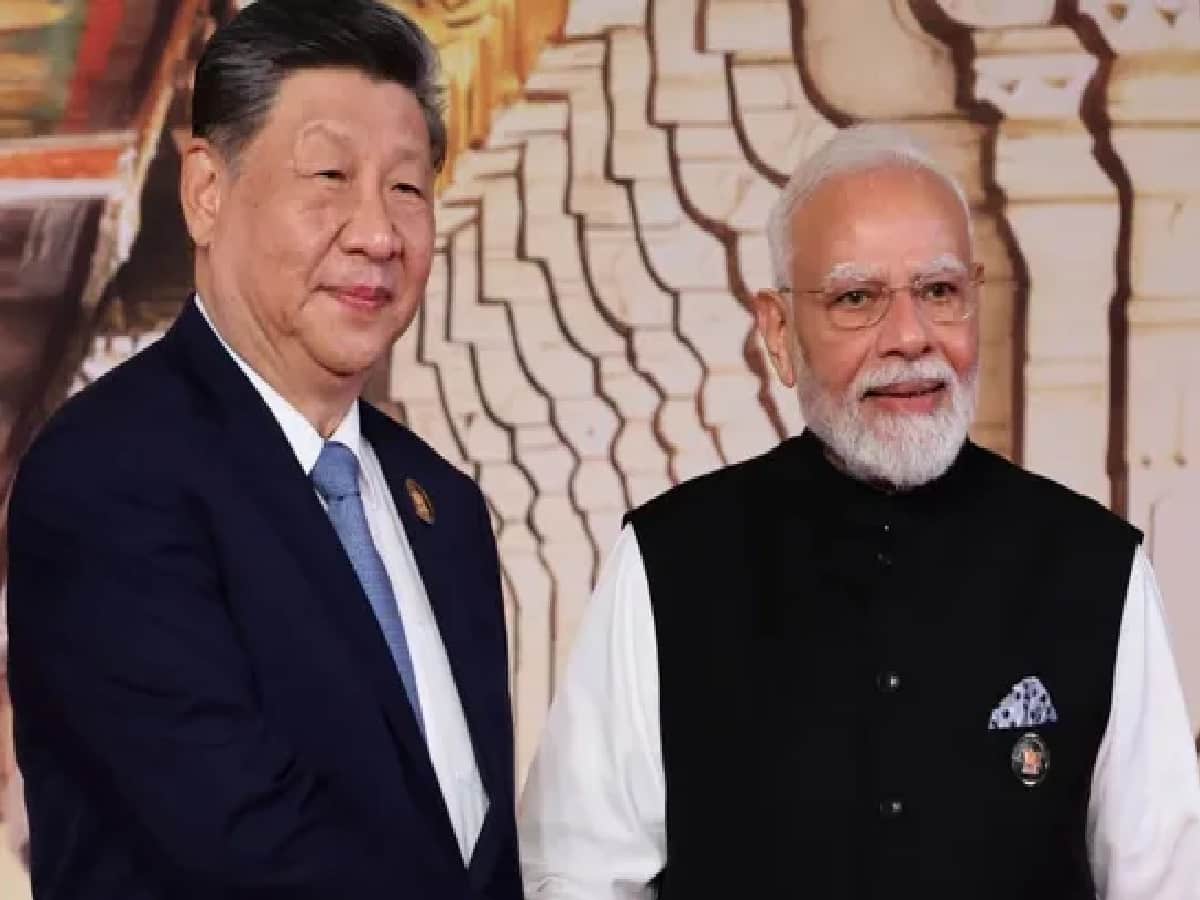
Chinese Goods & AI via BRICS: Why India Is Ring-Fencing Its Markets Against Xi Jinping's 5-Point Plan
Strategic caution has gripped South Block following Chinese President Xi Jinping's latest ambitious maneuvers at the closing session of the BRICS summit. With Beijing poised to assume the rotational chairship of the upcoming BRICS summit, Xi has aggressively pitched a comprehensive five-point action blueprint anchored by the creation of a "unified market" and the cross-border integration of Chinese open-source artificial intelligence (AI) platforms. Anticipating that China will push these initiatives onto the formal multilateral agenda next year, top Indian policymakers, diplomatic analysts, and national security strategists are responding with firm skepticism, viewing the proposals as a calculated Trojan horse designed to institutionalize Chinese economic and technological supremacy across the Global South.
Market Dumping Threat: Why India Opposes Converting BRICS into a Zero-Tariff Free Trade Bloc
From its inception, BRICS has deliberately avoided transforming into a tariff-free trading zone or customs union, functioning primarily as a platform for geopolitical coordination, south-south cooperation, and financial reform through institutions like the New Development Bank. Indian trade officials recognize that integrating markets by dismantling tariff barriers under the guise of multilateral unity would effectively eliminate critical domestic safeguards. Such a framework risks unleashing an unrestricted influx of low-cost, state-subsidized Chinese manufactured goods straight into the subcontinent, inflicting devastating damage on India's homegrown manufacturing ecosystem, micro, small, and medium enterprises (MSMEs), and indigenous technological R&D. Despite persistent lobbying from specific corporate sectors, New Delhi has maintained rigorous vetting mechanisms on Chinese foreign direct investment (FDI) under Press Note 3, aligning with broader global derisking strategies pursued across the United States, Europe, and Japan to systematically curb manufacturing dependence on Beijing.
Lessons from RCEP Exit: India's Strategic Pivot Toward Balanced Bilateral FTAs
New Delhi's wariness of Xi's unified market pitch is rooted in hard strategic precedents. In November 2019, India famously walked away from the Regional Comprehensive Economic Partnership (RCEP) negotiations, directly citing the absence of effective safeguards against Chinese market flooding, circuitous trade rerouting, and insurmountable trade deficits. Since executing that decisive exit, India has aggressively restructured its international trade policy, pivoting towards calibrated, mutually beneficial Free Trade Agreements (FTAs) with transparent market economies. Landmark pacts negotiated with Australia, the United Arab Emirates (UAE), the European Free Trade Association (EFTA), alongside ongoing high-level trade deliberations with the United Kingdom and the European Union, illustrate India's focused drive to diversify supply chains, attract high-tech value addition, and fortify supply resiliency away from unilateral dependencies.
Red Flags Over Chinese LLMs: Critical Data Sovereignty and Cyber Security Alarms
Beyond commerce, the most acute national security alarms are sounding over Xi Jinping's proposal to export and integrate Chinese Large Language Models (LLMs) and open-source AI architectures across BRICS member states. Security experts and defense intelligence officials view this initiative as a potential vector for digital espionage, systemic cyber vulnerability, and widespread algorithmic influence operations. Having previously prohibited hundreds of Chinese applications under the Information Technology Act over data integrity concerns, and having imposed strict procurement restrictions on Chinese-made CCTV cameras, telecommunication components, and optical equipment, Indian defense planners regard adopting Chinese-controlled foundation models as an existential threat to national data sovereignty. Consequently, New Delhi is expected to firmly resist any multilateral AI compact that compromises regional cybersecurity or subordinates sovereign tech infrastructure to Beijing's digital hegemony.