Sugar Prices Crash 10% Ahead of Festivities: 1 Kg Drops to ₹58.50 as Centre Expands Stock Limits
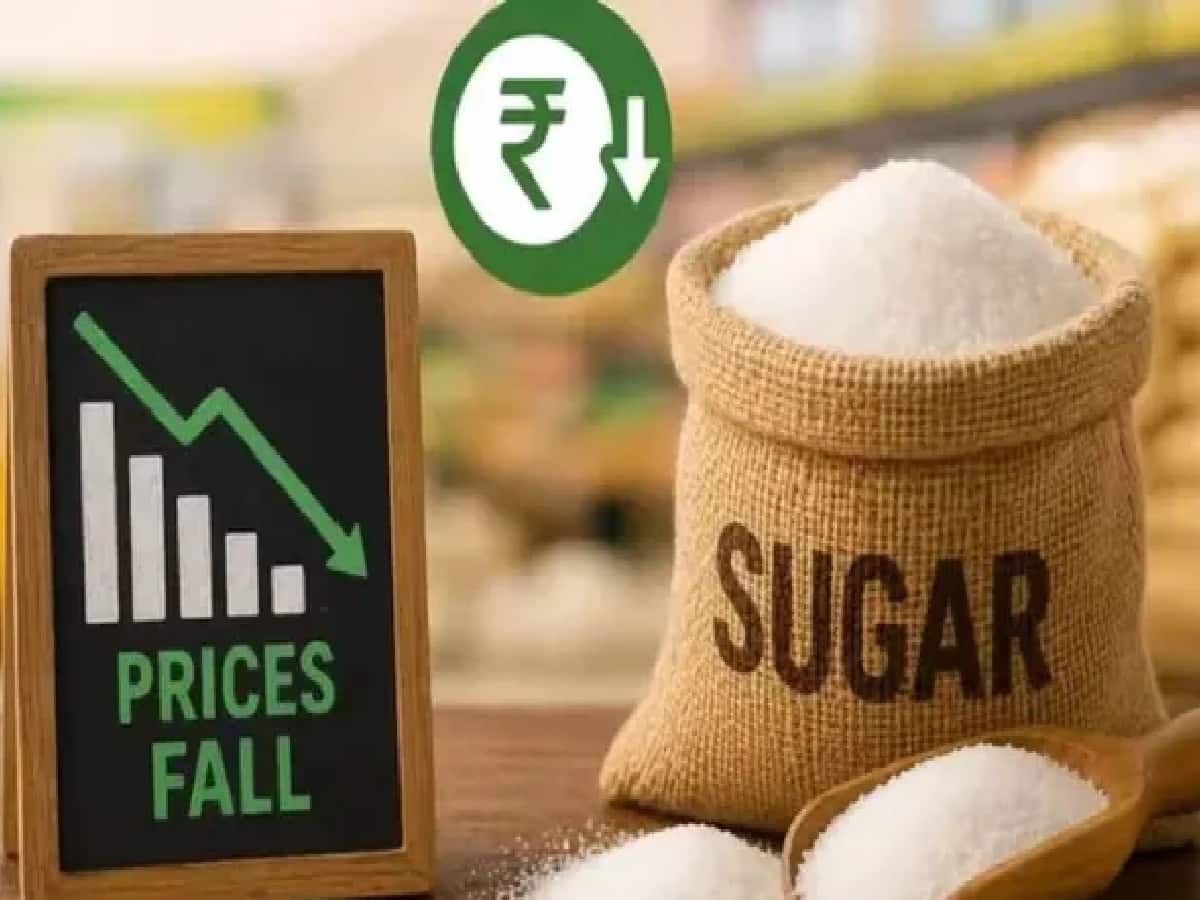
In a major festive cheer for Indian households, bakery owners, and confectioners, retail sugar prices have tumbled by nearly 10 percent across prime consumer markets, pulling down kitchen budgets ahead of peak festival demand. Official market data released on Saturday confirms that retail sugar has slid to approximately ₹58.50 per kilogram, offering direct consumer relief of around ₹6.50 per kg compared to the August peak of ₹65 per kg. Alongside easing market prices, the Union Ministry of Consumer Affairs, Food and Public Distribution has introduced a strategic relaxation in stocking limits for industrial bulk consumers, raising the permissible holding inventory ceiling from 15 days to 30 days while locking strict import clauses to protect domestic reserves.
Mill Gate Realization Tumbles 25%: Food Ministry Urges Trade Channels to Pass on Margins
While retail counters recorded a 10 percent price cooling, wholesale ex-mill realizations dropped even steeper, posting a sharp contraction of nearly 25 percent from their mid-monsoon highs. The sharp disconnect between wholesale factory gate drops and street retail prices prompted immediate government scrutiny. In an official advisory, the Department of Food and Public Distribution urged regional trade cartels, wholesale distributors, and retail grocers to immediately transmit the full benefit of lower factory gate rates to ordinary shoppers. By narrowing trader margins, the central administration aims to prevent retail inflation from spiking during the upcoming festival window when domestic sweetener consumption touches annual peaks.
Bulk Stockpiling Window Doubled to 30 Days: Lifeline for FMCG, Beverage, and Sweet Makers
To accommodate heavy production schedules for Diwali, Durga Puja, and the winter wedding calendar, the central government has officially amended the Sugar Control Order for large institutional buyers. Entities consuming over 10 metric tonnes of sugar monthly as an industrial raw material—including commercial sweet manufacturers, confectionery chains, biscuit bakers, dairy processors, and aerated soft drink bottlers—can now maintain up to 30 days of operational buffer stock, up from the rigid 15-day inventory cap implemented during earlier price spikes. This operational cushion prevents sudden supply crunches and allows food processing facilities to run uninterrupted shifts.
Import Condition for Additional 15 Days: TRQ and Advance Authorization Scheme Mandated
The extension from 15 to 30 days comes with a crucial regulatory rider to safeguard domestic buffer stocks. Bulk consumers are strictly prohibited from sourcing the extra 15-day inventory from the domestic open market, where the 15-day ceiling remains binding. Instead, any stockpiles held beyond the initial 15-day quota must be sourced exclusively from imported consignments cleared under either the Advance Authorization Scheme (AAS) or the Tariff Rate Quota (TRQ) mechanism. This two-tier regulatory mechanism ensures that industrial giants do not drain domestic supplies or provoke local shortages, preserving locally refined sugar for household retail distribution.
Mandatory Friday Digital Reporting: Food Department Cracks Down on Hoarding
To maintain transparent market intelligence and preempt speculative price manipulation, the Department of Food and Public Distribution has instituted mandatory weekly digital disclosure norms for all industrial consumers. Bulk buyers must upload their verified physical stock balances, factory receipts, and consumption figures every Friday on the ministry's dedicated online monitoring portal. Failure to submit accurate inventory disclosures will trigger strict enforcement measures under the Essential Commodities Act, ensuring that expanded holding windows are not exploited for illegal hoarding.