Researchers Crack How to Remotely Control Cell Waste Recycling
In a landmark discovery redefining how medicine approaches degenerative disorders, a collaborative international team of researchers has demonstrated that autophagy—the body’s innate cellular waste disposal mechanism—can be regulated and directed from outside the cell. For decades, the process by which human cells isolate, digest, and recycle toxic metabolic debris was presumed to be an insulated internal loop. By proving that this cleanup machinery can be externally guided, scientists have opened new frontiers in therapeutic interventions for complex ailments such as cancer, Alzheimer's, and Parkinson's disease, where natural cellular clearance pathways break down and trigger toxic protein buildup.
Joint Indo-US Scientific Collaboration: Premier Institutions Crack the Code
The breakthrough findings represent a collaborative endeavor uniting researchers from India and the United States. Key institutions driving the research include the Council of Scientific and Industrial Research - Institute of Genomics and Integrative Biology (CSIR-IGIB) in New Delhi, the National Institute of Immunology (NII) in New Delhi, Ashoka University in Sonepat, Haryana, and the University of California, Los Angeles (UCLA). By synthesizing biophysical computational simulations with laboratory validation, the multi-institutional team decoded the precise physical and biochemical triggers governing the lifecycle of cellular waste clearing.
Demystifying Autophagy: How Autophagosomes Build Internal Recycling Bins
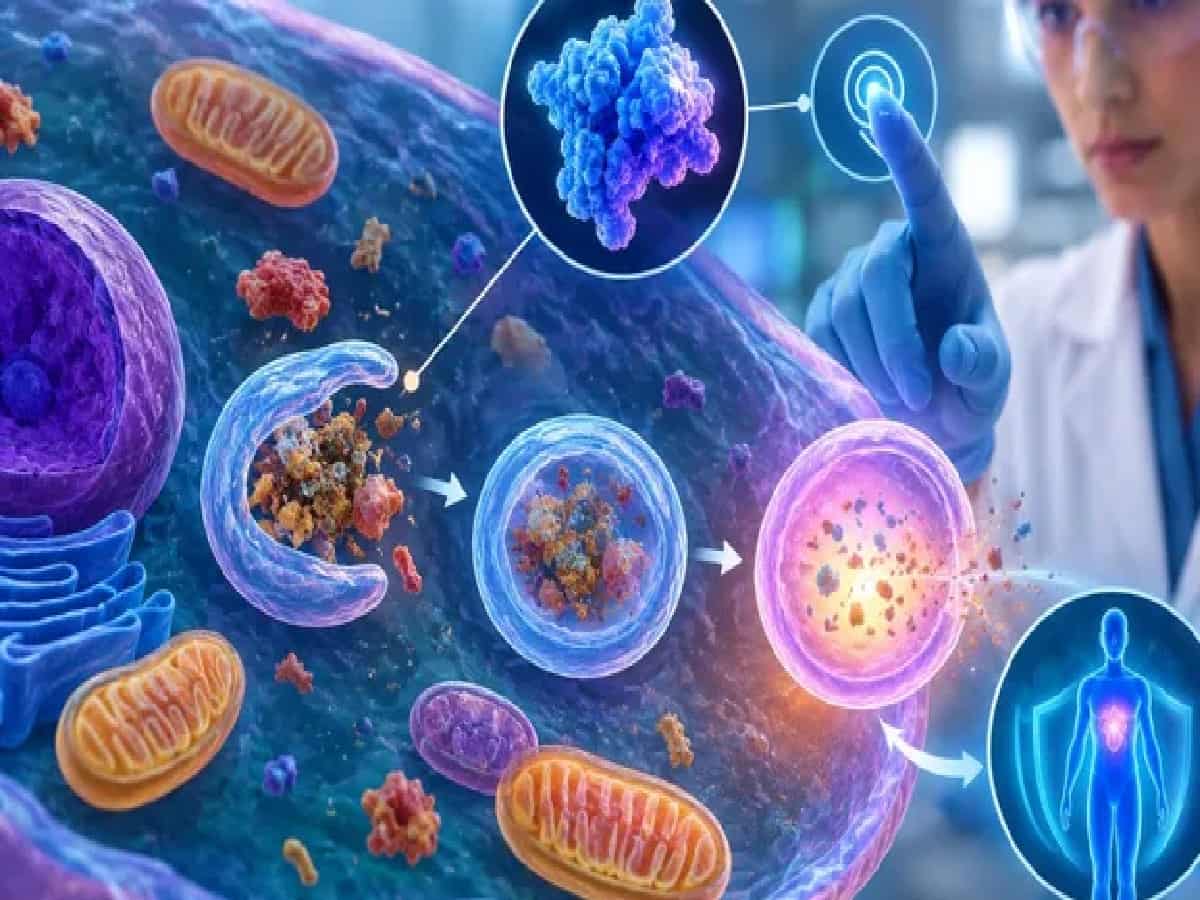
Derived from the ancient Greek words meaning "self-eating," autophagy operates as the cell's internal reclamation plant. When intracellular debris, damaged organelles, or misfolded proteins accumulate, the cell constructs a double-membraned vesicle called an autophagosome, functioning like a microscopic recycling bin. This structure encapsulates the debris and transports it to fuse with lysosomes, where aggressive enzymes break the materials down into fundamental nutrients and amino acids, converting cellular waste into raw building blocks for energy and cellular renewal.
The Role of Intermittent Fasting and the Shape-Shifting LC3 Protein
A natural trigger for this cleanup is nutrient deprivation, notably induced through intermittent fasting protocols. When prolonged fasting lowers circulating glucose and amino acid concentrations, cellular energy sensors initiate autophagy to reclaim trapped resources. The breakthrough study deployed molecular simulations to observe the dynamic behavior of LC3, a structural protein essential for autophagosome assembly. Researchers discovered that LC3 physically alters its structural conformation upon coming into contact with the inner curvature of the autophagosome membrane. This conformational shift acts as a molecular switch, proving that manipulating surface membrane physics and external signaling molecules can regulate how swiftly and efficiently cells purge hazardous metabolic waste.