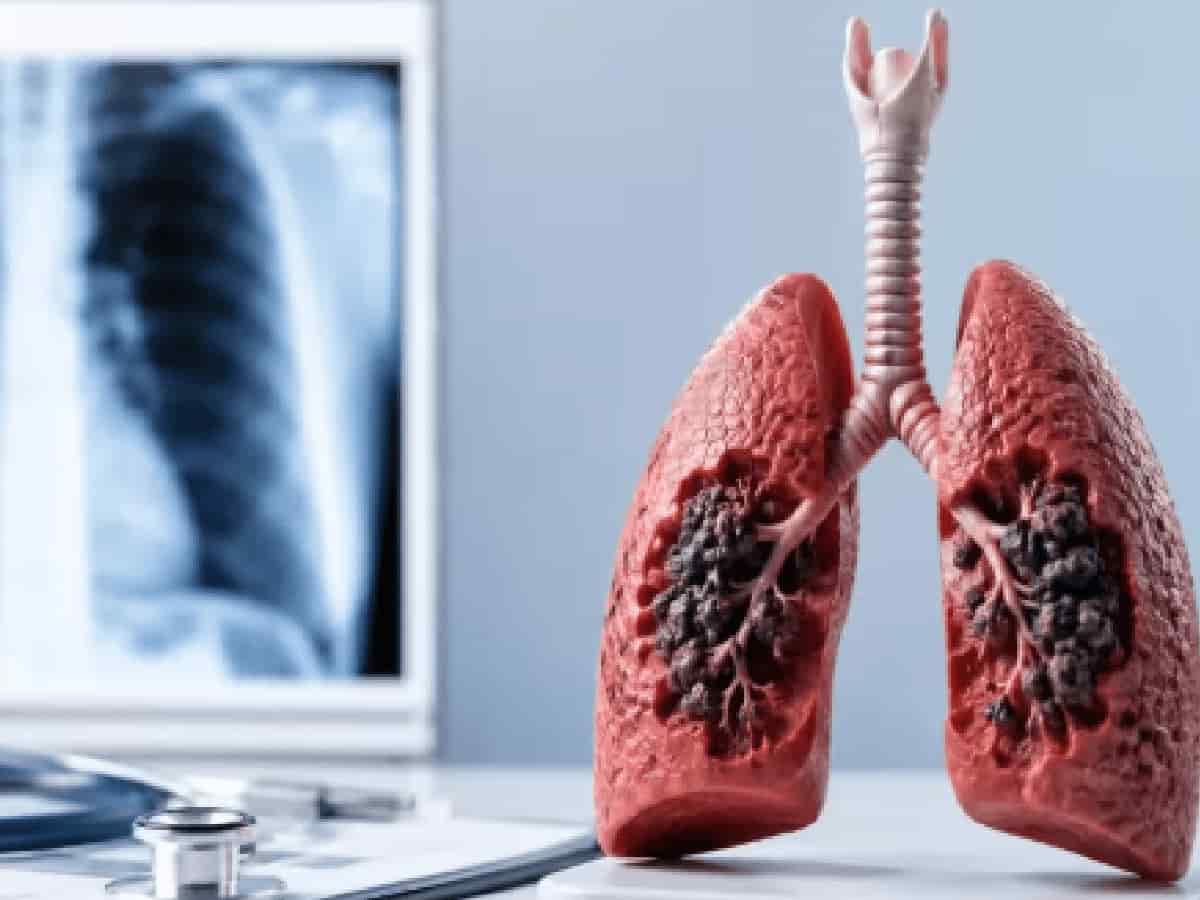
Quit Smoking but Still at Risk, Why Doctors Recommend Low-Dose CT Lung Scans
While quitting smoking remains the single most impactful lifestyle decision to protect respiratory health, extensive clinical evidence confirms that former long-term smokers still face persistent cancer risks for years after their last cigarette. Because early-stage lung tumors often develop silently without overt coughing, chest pain, or noticeable shortness of breath, lung cancer continues to rank as one of the leading causes of cancer-related mortality globally. Addressing this public health challenge, a landmark global scientific review led by the World Health Organization's International Agency for Research on Cancer (IARC)—published in The New England Journal of Medicine—confirms that regular Low-Dose Computed Tomography (LDCT) scans significantly reduce cancer deaths by catching suspicious pulmonary nodules long before symptoms emerge.
Global Experts Back Low-Dose CT: Landmark Findings from IARC and AIIMS
The comprehensive international scientific consensus synthesizes decades of oncology trials across multiple continents:
-
Multinational Medical Consensus: The evaluation brought together 23 top oncology specialists from 17 nations, including Dr. Abhishek Shankar from the All India Institute of Medical Sciences (AIIMS), New Delhi, reinforcing its relevance for global healthcare protocols.
-
Superiority Over Standard CT Scans: Unlike conventional chest CT scans that expose patients to higher radiation levels, a low-dose CT scan uses a substantially lower radiation dose while producing high-resolution, three-dimensional cross-sectional imaging of the lungs capable of detecting tiny pre-cancerous growths.
-
Substantial Mortality Reductions: Landmark trials demonstrate clear survival advantages; the US National Lung Screening Trial (NLST) documented a 16% reduction in lung cancer mortality over seven years, while Europe's extensive NELSON trial revealed a 24% drop in cancer deaths among screened men over a 10-year follow-up.
Who Actually Needs Screening? Decoding the 20 Pack-Year Benchmark
Health authorities emphasize that lung cancer screening is not intended for the general population, but rather tailored strictly to high-risk profiles:
-
USPSTF Eligibility Parameters: In alignment with US Preventive Services Task Force (USPSTF) guidelines, annual LDCT screening is advised for adults aged 50 to 80 years who have a documented smoking history of at least 20 pack-years.
-
Current and Former Smokers: Eligibility applies to both active smokers and individuals who have successfully quit within the past 15 years.
-
Understanding 'Pack-Years': A pack-year quantifies cumulative tobacco exposure. Smoking one pack (20 cigarettes) per day for 20 years equals 20 pack-years, as does smoking two packs daily for 10 years. Patients should always consult a pulmonologist or oncologist rather than scheduling independent diagnostic scans.
Chest X-Rays vs. Low-Dose CT: Why Standard Radiographs Fail to Save Lives
A common misconception among patients is that an ordinary chest X-ray provides adequate preventive screening:
-
Ineffective Mortality Reduction: Definitive long-term clinical research, including the massive PLCO (Prostate, Lung, Colorectal, and Ovarian) trial in the United States, demonstrated no meaningful reduction in lung cancer deaths between individuals receiving regular chest X-rays and those receiving no routine screening.
-
Diagnostic Limitations: Standard planar chest X-rays lack the spatial resolution to distinguish small, sub-centimeter pulmonary nodules from overlapping bone structures, cardiac silhouettes, and blood vessels, rendering them ineffective as an early screening tool.
Understanding the Trade-Offs: False Positives, Overdiagnosis, and Radiation
While LDCT scans offer lifesaving early intervention, clinical experts acknowledge certain diagnostic trade-offs that require specialist oversight:
-
Managing False Positives: Low-dose CT scans frequently flag benign pulmonary scars, historical infection marks, or harmless granulomas as nodules, occasionally requiring follow-up scans or invasive biopsy procedures that ultimately confirm no malignancy.
-
Risk of Overdiagnosis: Screening can sometimes detect indolent, extremely slow-growing micro-tumors that might never have caused clinical harm during a patient's natural lifespan.
-
Radiation Considerations: Although LDCT emits a fraction of conventional CT radiation, repeated annual screenings accumulate mild radiation exposure, necessitating careful medical justification.
The Role of Artificial Intelligence and the Primacy of Smoking Cessation
The future of pulmonary oncology pairs advanced computational imaging with comprehensive cessation support:
-
AI-Assisted Diagnostic Triage: Machine learning algorithms are increasingly being integrated into radiology workstations to assist physicians in measuring nodule volume doubling times; however, medical consensus notes that AI serves strictly as an assistant tool and cannot replace expert clinical judgment.
-
Cessation Remains Paramount: Oncology specialists stress that diagnostic screening detects existing disease but does not prevent the underlying cellular harm caused by smoke exposure. Pairing screening programs with behavioral counseling and approved cessation medications remains the most effective strategy for preventing cancer.