







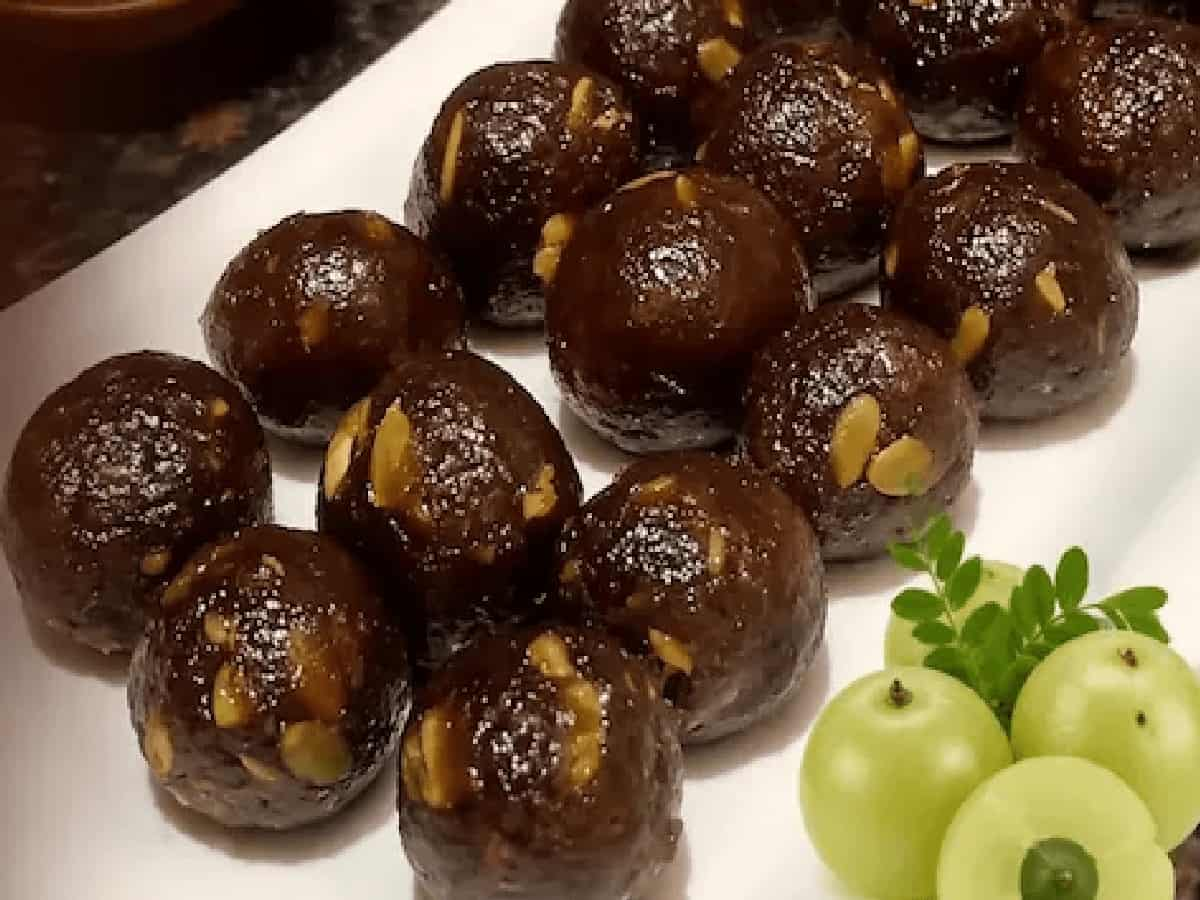
Amla Gud Laddu Recipe: Make Sweet Gooseberry Laddus That Last 6 Months
As crisp winter mornings settle across northern India, heaps of glossy, pale-green amla (Indian gooseberries) begin arriving at local vegetable markets and neighborhood carts from Pratapgarh, Lucknow, Kanpur, and Unnao to New Delhi, Varanasi, Jaipur, and Patna. Revered in Ayurveda and modern nutrition alike as one of nature’s richest sources of Vitamin C, polyphenols, and antioxidants, winter amla strengthens seasonal immunity, supports digestion, nourishes skin and hair, and boosts iron absorption. Yet despite its unmatched health credentials, amla’s sharp sourness and astringent aftertaste often make children—and plenty of adults—turn away from eating it raw, while preparing traditional amla murabba demands days of pricking, soaking, and boiling in heavy sugar syrup.
Enter Amla Gud Laddu—a wholesome, refined-sugar-free winter confection crafted by slow-roasting fresh Indian gooseberries with unrefined jaggery (gur), pure desi ghee, aromatic cardamom, and crunchy nuts and seeds. When cooked correctly, these melt-in-the-mouth laddus lose every trace of bitterness or astringency, delighting kids like a festive sweet while delivering daily winter nourishment. Better still, with the right roasting technique, a single batch stays fresh for up to six months.
Essential Ingredients for Making Amla Gud Laddu
To prepare a generous batch of roughly 18 to 22 medium-sized laddus at home, gather the following pantry ingredients:
-
Fresh Winter Amla (Indian Gooseberries): 500 grams (firm, blemish-free berries)
-
Grated or Crushed Unrefined Jaggery (Gud): 500 grams (equal weight to amla for balanced sweetness)
-
Pure Desi Ghee: 2 to 3 tablespoons (plus a few drops for greasing palms)
-
Chopped Dry Fruits & Seeds: 1/2 cup combined (cashews, almonds, raisins, melon seeds/magaz, and pumpkin seeds)
-
Desiccated Coconut (Nariyal Burada): 1/3 cup (plus extra for light coating, if desired)
-
Green Cardamom Powder (Elaichi): 1 teaspoon (freshly crushed)
Step-by-Step Method: How to Make Non-Bitter Amla Jaggery Laddus
Follow this simple, foolproof cooking sequence to achieve rich flavor, glossy texture, and long shelf life:
-
Steam or Boil and Deseed the Gooseberries: Wash the fresh amla thoroughly and boil or steam them in a stainless-steel vessel for 8 to 10 minutes until the segments soften and split open easily along their natural grooves. Allow the berries to cool completely, discard every seed, and transfer the soft segments into a mixer jar. Pulse into a coarse, grainy mash rather than a watery fine paste, adding no more than a splash of water only if required to turn the blades.
-
Roast the Coarse Amla in Desi Ghee (Use Stainless Steel Only): Place a heavy-bottomed stainless-steel kadhai or pan over low heat and warm 1 to 1.5 tablespoons of desi ghee. Add the coarsely ground gooseberries and roast steadily over a low flame without covering the pan, pressing any larger chunks gently with the back of your ladle. Crucial Kitchen Rule: Never cook gooseberries in an iron or aluminum pan, as amla’s natural ascorbic and organic acids react with reactive metals—turning the mixture dark and imparting an unpleasant metallic bitterness. Continue stirring until moisture evaporates and the roasted amla begins pulling cleanly away from the base of the steel pan.
-
Melt and Caramelize With Equal Jaggery: Once the amla is thoroughly roasted, add the crushed jaggery. As the jaggery melts, the mixture will temporarily loosen into a glossy, moist mass. Keep cooking over a low flame, stirring and mashing continuously until the excess moisture cooks off, the mixture thickens into a cohesive fudge-like dough, and desi ghee begins separating along the edges. Thoroughly evaporating moisture at this stage is the key secret to extending shelf life.
-
Fold in Nuts, Seeds, Coconut, and Cardamom: Without turning off the stove immediately, stir in the crushed green cardamom powder, chopped cashews, almonds, raisins, melon/pumpkin seeds, and desiccated coconut. Roast on low heat for just 2 minutes so the nuts turn fragrant and crisp while binding evenly into the jaggery-amla base.
-
Cool Uncovered and Shape Into Shiny Laddus: Switch off the gas, but keep stirring the mixture for another 1 to 2 minutes because a heavy steel pan retains residual heat that could scorch the bottom. Spread the mixture slightly and let it cool completely uncovered at room temperature so steam does not condense back into water droplets. Once comfortably warm to the touch, grease your palms lightly with desi ghee and roll the mixture into smooth, round, glossy laddus.
Quick Cooking & Storage Reference Guide
| Preparation Detail | Recommended Specification |
|---|---|
| Amla-to-Jaggery Ratio | 1 : 1 (e.g., 500 g boiled amla : 500 g grated jaggery) |
| Mandatory Cookware | Heavy-bottomed stainless-steel kadhai (strictly avoid iron & aluminum) |
| Room-Temperature Shelf Life | 15 to 20 days in a clean, dry airtight container |
| Refrigerated Shelf Life | Up to 5 to 6 months inside a sterilized, airtight glass jar |
How to Store Amla Gud Laddus for 6 Months Without Spoilage
If your family plans to finish the batch within two to three weeks, keeping the laddus in a dry, airtight container at cool winter room temperature works effortlessly. However, to preserve a larger batch for five to six months, transfer the completely cooled laddus into a clean, moisture-free airtight glass jar and store it in the refrigerator. Always use a dry spoon when taking out a laddu—and enjoy one wholesome piece each morning after breakfast to keep winter fatigue, seasonal coughs, and sluggish immunity far away.




