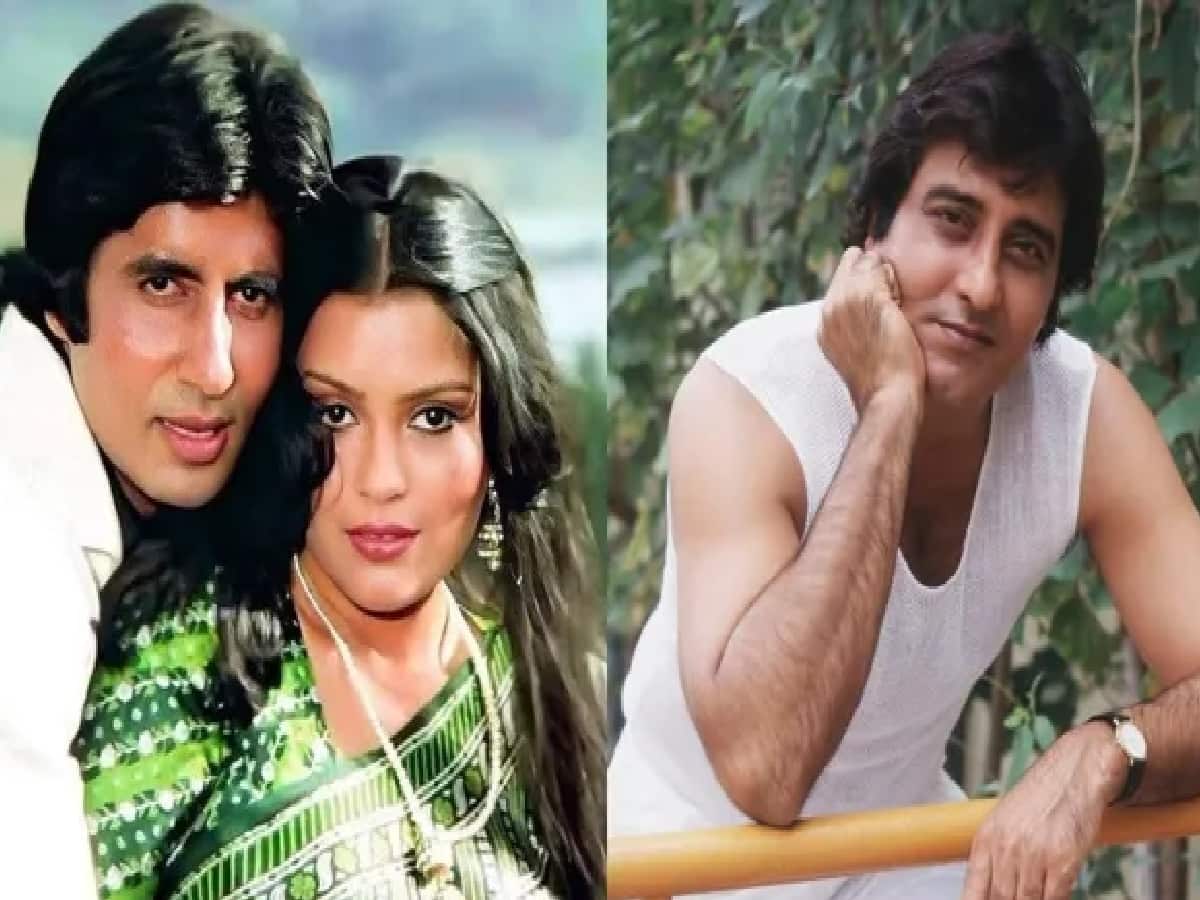
Vinod Khanna Was Dropped from Amitabh Bachchan's 1980 Hit 'Dostana'
During an interactive panel session at the International Film Festival of India (IFFI) in Goa, filmmaker Karan Johar once reflected on classic Bollywood cinema, noting that golden-era audiences were drawn primarily to a few foundational narrative frameworks—chiefly the dramatic lost-and-found trope and emotionally charged love triangles. While contemporary retrospectives often examine romance formulas, few films executed the high-stakes romantic conflict as effectively as Dostana, the 1980 action-drama bankrolled by Karan Johar's father, legendary producer Yash Johar. Written by the celebrated writer duo Salim-Javed, the plot centers on inseparable childhood companions Vijay (Amitabh Bachchan), an intrepid police officer, and Ravi (Shatrughan Sinha), a flamboyant defense attorney. Their bond fractures when both men inadvertently fall in love with the same woman, Sheetal (Zeenat Aman). While Vijay woos her with breezy confidence and wins her heart, Ravi pines in silent adoration, entirely misconstrued by Sheetal as platonic friendship. When ruthless underworld elements expose Vijay's secret romance to Ravi, the revelation shatters Ravi emotionally, driving the former brothers-in-arms into a bitter, vengeful rivalry.
Raj Khosla's Sabbatical, Scotch, and Persuasion by Yash Johar
Before emerging as one of the highest-grossing commercial hits of 1980, Dostana nearly missed getting made. Its acclaimed director, Raj Khosla—widely regarded as one of Hindi cinema’s finest visual storytellers—had just wrapped Main Tulsi Tere Aangan Ki, an adaptation of the acclaimed Marathi novel Aashi Tujhi Preet. Exhausted by industry politics, Khosla walked away from commercial filmmaking, openly declaring that he had retired from cinema to drown his days in Scotch. Concurrently, Yash Johar was striving to establish his independent production banner, Dharma Productions, seeking a cinematic vehicle that would liberate him from routine publicity and management logistics. Johar persistently pursued Khosla, urging him to return to the director's chair. Armed with a dynamic script from screenwriting maestros Salim-Javed, Johar finally persuaded Khosla to listen to the narration. Though Khosla was initially unimpressed, Salim-Javed agreed to rework pivotal story arcs to match his artistic sensibilities, paving the way for the production.
"Why Would She Choose Amitabh?": How Khanna's Striking Looks Cost Him the Role
The original casting blueprint for Dostana looked remarkably different from the finished film. Having previously collaborated with Amitabh Bachchan, Raj Khosla finalized a marquee ensemble featuring Bachchan, Zeenat Aman, and his longtime close friend Vinod Khanna as Ravi. Bachchan and Khanna had previously shared magnetic screen chemistry in the 1978 mega-blockbuster Muqaddar Ka Sikandar, making their reunion an immediate trade sensation. However, as pre-production advanced, Khosla abruptly reconsidered Khanna's casting on purely narrative grounds. Analyzing the visual credibility of the love triangle, Khosla realized that Khanna’s rugged, impeccably handsome screen persona presented an insurmountable plot hurdle, reasoning: "Why would a heroine leave an exceptionally handsome hero like Vinod Khanna to go with Amitabh Bachchan?" Convinced that the audience would find Sheetal's rejection of Khanna unbelievable, Khosla made the difficult directorial call to remove his friend from the project, clearing the decks to cast Shatrughan Sinha, whose intense, brooding energy provided the ideal narrative contrast to Bachchan.
Musical Brilliance: Laxmikant-Pyarelal, Anand Bakshi, and Rafi-Kishore Anthems
Released in theaters on October 17, 1980, Dostana cemented its place in cinematic lore through its soundtrack. Screenwriter Salim Khan frequently observed that after showman Raj Kapoor, director Raj Khosla possessed an unparalleled instinct for integrating music into narrative storytelling. Backed by the melodic genius of composer duo Laxmikant-Pyarelal and lyricist Anand Bakshi, the film yielded immortal musical set-pieces. At the story's dramatic breaking point, Mohammed Rafi delivered the soul-stirring betrayal ballad "Mere Dost Kissa Ye Kya Ho Gaya, Suna Hai Ki Tu Bewafa Ho Gaya." Equally memorable is the film’s opening friendship anthem, "Bane Chahe Dushman Zamana Hamara / Salamat Rahe Dostana Hamara," an electric duet uniting Mohammed Rafi and Kishore Kumar that remains a definitive friendship song across the subcontinent. Anchored by its dramatic friction and chart-topping score, Dostana stood for decades as the crowning commercial triumph of Dharma Productions, validating the timeless resonance of a masterfully told love triangle.