The Untold Story of Majrooh Sultanpuri Who Penned 300+ Timeless Hits
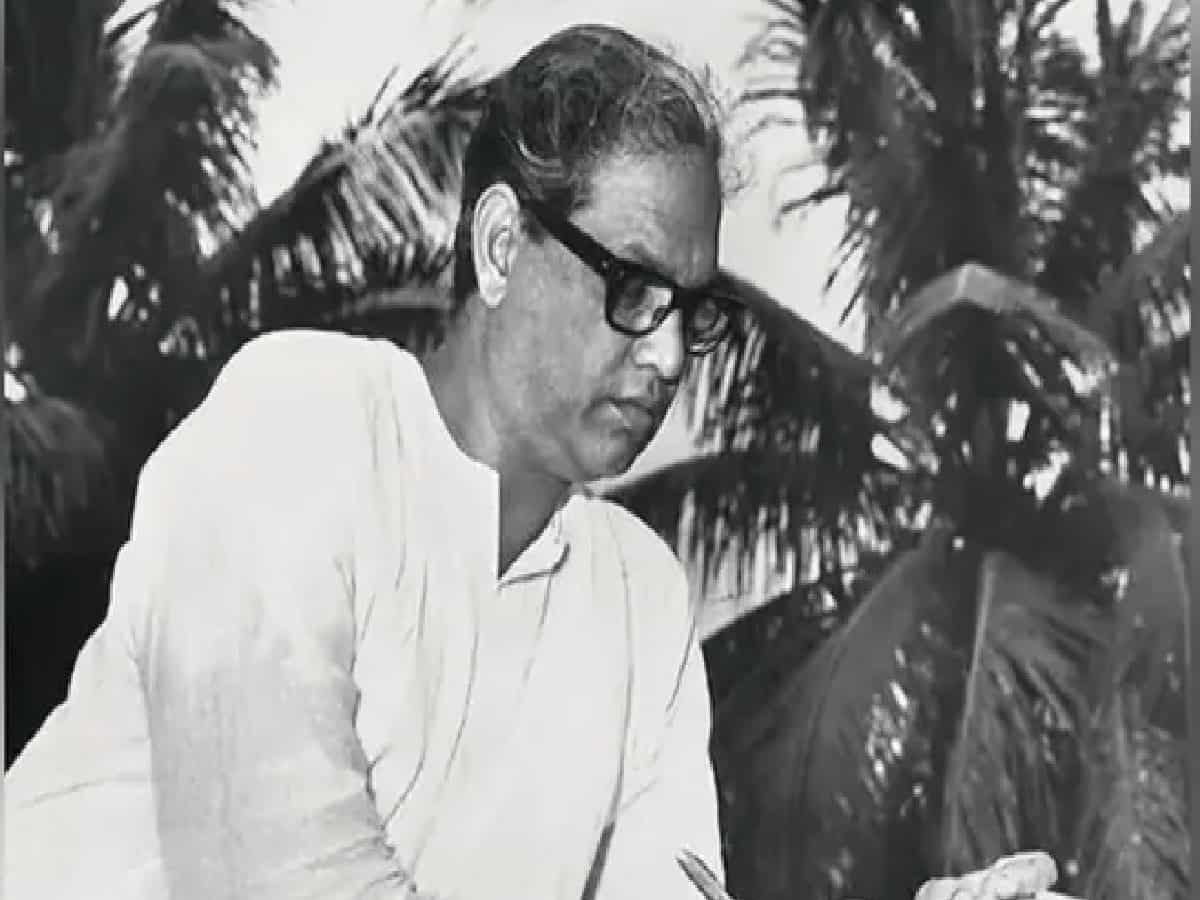
From defining youth romance in the 1990s with "Pehla Nasha" to giving Indian cinema immortal golden-era melodies like "Babuji Dheere Chalna" and "Chala Jata Hoon", very few literary maestros have shaped the acoustic soul of Bollywood quite like Majrooh Sultanpuri. Sung by vocal royalty including Lata Mangeshkar, Mohammed Rafi, and Kishore Kumar, his verses transcended generations across five decades of musical evolution. Yet behind the poetic romance and rhythmic brilliance lay an unyielding political rebel—a progressive lyricist who was imprisoned for nearly two years after writing biting anti-establishment verses against India's first Prime Minister, Jawaharlal Nehru, and who steadfastly refused to sign an apology even when faced with financial ruin and detention.
The Anti-Establishment Verse: Calling Nehru a 'Slave of the Commonwealth'
Born Asrar-ul-Hassan Khan on October 1, 1919, in Sultanpur (Uttar Pradesh), the poet adopted the pen name Majrooh Sultanpuri and made an explosive debut writing lyrics for K.L. Saigal in the 1946 film Shahjehan, quickly following up with landmark scores in Mehndi, Andaz, and Aarzoo:
-
Progressive Writers' Movement: Majrooh was an active voice in the leftist Progressive Writers' Association (PWA), using his fiery Urdu couplets to champion laborers, mill workers, and agrarian rights.
-
The 1948 Crackdown: Following the Second Congress of the Communist Party of India in Kolkata in 1948, the post-independence government initiated a sweeping nationwide crackdown on communist sympathizers and radical poets.
-
The Controversial Couplet: During a rally attended by striking mill workers in Bombay, Majrooh recited a poem that sharply criticized the new ruling dispensation, comparing Nehru’s policies to totalitarianism and referring to him as a "slave of the Commonwealth" (Commonwealth ka daas).
-
Arrest Alongside Balraj Sahni: State authorities took severe offense at the verses, arresting Majrooh alongside celebrated actor and fellow progressive cultural activist Balraj Sahni.
Defiance Behind Bars: Refusing an Apology and Two Years in Arthur Road Jail
When pressured by the legal administration to offer a formal pardon and recant his political poetry, Majrooh chose ideological integrity over easy freedom:
-
Outright Rejection of Mercy: The then-Bombay government offered to drop all charges and release him immediately if he submitted an unconditional written apology for the poem targeting Prime Minister Nehru; Majrooh flatly refused.
-
Two Years of Confinement: Standing by his right to free political expression, the poet was sentenced to nearly two years in prison, spending his days inside Arthur Road Jail.
-
Personal Hardships: While behind bars, his family faced dire financial distress, and his eldest daughter was born while he remained locked away, with friends like Raj Kapoor stepping in quietly to support his household.
The Guru Dutt Resurgence: Reigniting the Golden Era of Hindi Film Music
Stepping out of prison in the early 1950s, Majrooh found his path back to film studios paved with skepticism, but a historic partnership with visionary filmmaker Guru Dutt changed his destiny forever:
-
Comeback With Baaz and Aar Paar: In 1953 and 1954, Guru Dutt entrusted Majrooh with the musical lyrics for Baaz and Aar Paar, teaming up with music director O.P. Nayyar.
-
Unstoppable Chartbusters: The collaboration produced evergreen anthems that swept across radio airwaves—including "Babuji Dheere Chalna," "Kabhi Aar Kabhi Paar," "Sun Sun Sun Zalima," and "Yeh Lo Main Haari Piya."
-
A Resilient Trajectory: The overwhelming success of these records established Majrooh as an irreplaceable pillar of Hindi film songcraft, ensuring he never looked back throughout the 1950s and 1960s.
From Kishore Kumar to Aamir Khan: A Five-Decade Reign of Musical Magic
Majrooh Sultanpuri's genius lay in his chameleon-like adaptability, seamlessly evolving his lyrical style across vastly different musical eras:
-
The 1970s and 1980s Pop Dynamism: He penned immortal tracks with R.D. Burman and Kishore Kumar, delivering youthful classics like "Chala Jata Hoon" and vibrant festive hits like "Aye Ja Re Hat Natkhat."
-
Redefining the 1980s Youth Wave: In 1988, he crafted the generational teenage anthem "Papa Kehte Hain Bada Naam Karunga" for Aamir Khan's breakout film Qayamat Se Qayamat Tak, proving his verses remained as young as the contemporary audience.
-
The Timeless 1990s Nostalgia: Well into his seventies, Majrooh penned the iconic romantic lyrics for Jo Jeeta Wohi Sikandar (1992), creating "Pehla Nasha," "Yahan Ke Hum Sikandar," and "Yaaron Mere Pyaro," cementing his status as India's first lyricist to win the prestigious Dadasaheb Phalke Award.