







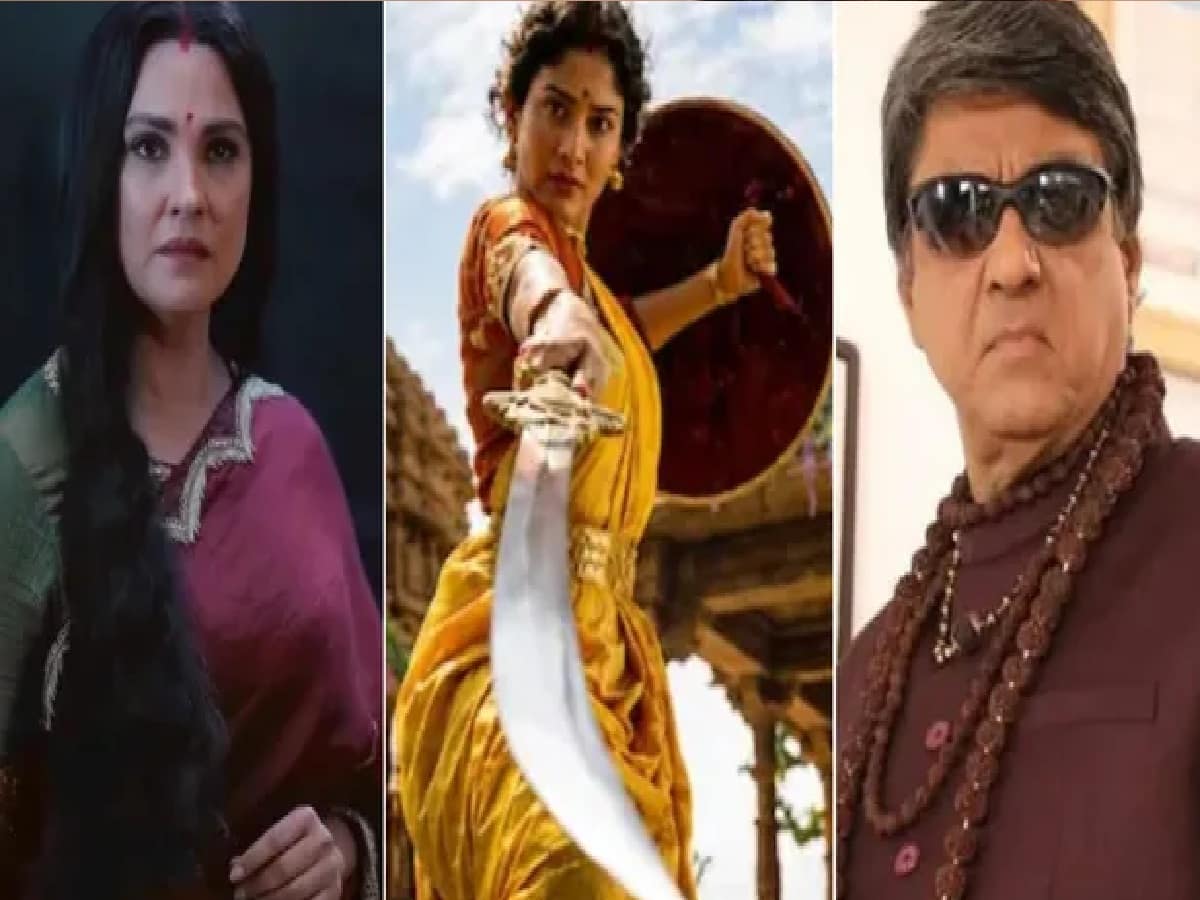
Lara Dutta Slams 'Narrow Mindset' Over Sai Pallavi's Sita
Filmmaker Nitesh Tiwari’s grand mythological spectacle Ramayana (also released as Ramayanam Part 1) continues to draw packed family audiences across theaters from New Delhi, Mumbai, and Ayodhya to Lucknow, Bengaluru, and Hyderabad, earning widespread praise for its visual scale and heartfelt performances. Amid the celebratory box office run, however, a spirited cultural debate has erupted on social media over a sequence in which Sai Pallavi’s Mata Sita battles demonic attackers in the forest. Veteran actor Mukesh Khanna, celebrated by generations for playing Bhishma Pitamah in B.R. Chopra’s Mahabharat and Shaktimaan, publicly criticized the makers for portraying Sita as an action-oriented fighter, claiming the depiction strays from Maharishi Valmiki’s text. Now, actress Lara Dutta—who portrays Queen Kaikeyi in the epic—has stepped forward with a poised yet firm defense of Sai Pallavi and the film’s creative vision. Speaking in an interview with NDTV on Friday, November 13, 2026, Lara Dutta dismantled the objections without naming Khanna directly, urging critics to let go of "narrow-mindedness" and appreciate the broader historical and cinematic context.
Lara Dutta Defends Sai Pallavi's Warrior Sita, Calls Out 'Narrow Mindset'
Addressing the online chatter surrounding Sai Pallavi’s action sequences in Ramayana, Lara Dutta approached the controversy with calm clarity and historical perspective. Rather than dismissing audience curiosity, she explained why portraying Sita as capable of physical self-defense makes complete sense both culturally and dramatically. First, she reminded viewers that Indian civilization is home to numerous revered retellings and regional traditions of the Ramayana, each illuminating different facets of the epic’s timeless characters. Second, she pointed to historical reality during ancient royal eras, noting that in the courts of kings and emperors, both princes and princesses were systematically trained not only in literature, music, and fine arts, but also in martial disciplines and self-defense.
Elaborating on why Sita’s strength in the forest should not surprise viewers, Lara Dutta emphasized that a royal princess raised in King Janaka’s court in Mithila—who goes on to endure fourteen arduous years of exile in dense, perilous wilderness—would naturally possess the courage and training to protect herself when confronted with danger. Speaking candidly during the interview, she observed that when people examine a character placed in extreme peril, it is entirely natural to recognize that she would not simply stand by as a helpless victim. She added that anyone surviving fourteen years in exile must possess immense inner and physical resilience, concluding pointedly that audiences ought to set aside a narrow mindset and immerse themselves in the grand cinematic experience being offered on the big screen.
What Mukesh Khanna Said About Sai Pallavi Fighting Demons in 'Ramayana'
Lara Dutta’s remarks came directly on the heels of a widely circulated video statement by Mukesh Khanna, who took strong exception to scenes showing Sai Pallavi’s Sita fending off forest demons. In his video, the veteran actor expressed shock after reading social media commentary describing how Sita fights, kicks, and overpowers two demons in a style reminiscent of Rani Lakshmibai of Jhansi. Khanna stated that he personally checked Maharishi Valmiki’s Ramayana and found no mention of Sita engaging in physical combat, arguing that modern filmmakers were projecting contemporary action-heroine tropes onto sacred scripture.
Defining Sita strictly through her devotion and quiet endurance, Mukesh Khanna contended that she was the consort of Maryada Purushottam Lord Ram who exemplified selfless service by willingly embracing fourteen years of forest exile alongside her husband, rather than acting as a martial warrior. Raising a rhetorical question to challenge the creative choice, he argued that if Sita had indeed been a trained fighter, she would have fought Ravana himself during her abduction. Khanna went on to accuse the filmmakers of altering sacred lore unnecessarily and remarked sharply that they should feel ashamed for inserting fabricated combat sequences into the story millions have watched and revered since childhood.
Diverse Ramayana Traditions and the Debate Over Cinematic Storytelling
Beyond the immediate exchange between two prominent actors, the debate highlights a fascinating intersection between scriptural literacy and modern cinema. Scholars of Indian literature frequently note that while Valmiki’s Sanskrit epic and Goswami Tulsidas’s Ramcharitmanas form the foundational pillars of the Ramayana tradition, centuries of classical and regional works—including the Adbhuta Ramayana, Kamba Ramayanam, and folk traditions across Mithila and South India—have celebrated Sita not merely as an emblem of grace and sacrifice, but also as Shakti incarnate, capable of extraordinary courage in moments of crisis. Even within canonical narratives, Sita’s effortless lifting of Lord Shiva’s mighty bow (Pinaka) as a young girl in King Janaka’s palace is celebrated as early proof of her unmatched strength.
In mounting Ramayana for contemporary global audiences, director Nitesh Tiwari and his ensemble—headlined by Ranbir Kapoor as Lord Ram, Sai Pallavi as Mata Sita, Yash as Ravana, Sunny Deol as Lord Hanuman, and Lara Dutta as Kaikeyi—have sought to honor spiritual reverence while grounding every character in emotional and physical realism. Sai Pallavi’s nuanced portrayal, which blends serene dignity with quiet resolve, has earned acclaim from critics and families alike, with many viewers praising how her performance captures both Sita’s compassion and her fearless spirit.
Cast Solidarity and Unfazed Box Office Momentum Nationwide
As social media users continue debating Mukesh Khanna’s critique alongside Lara Dutta’s measured rebuttal, theatrical momentum for Ramayana remains firmly intact across major exhibition circuits in Uttar Pradesh, Maharashtra, Delhi-NCR, Rajasthan, and the southern states. Entertainment observers noted that Lara Dutta’s decision to speak up—defending her younger co-star’s performance with historical reasoning rather than personal invective—struck a chord with audiences who value thoughtful artistic interpretation. Ultimately, while passionate discussions around mythological adaptations are woven into India’s cultural fabric, Lara Dutta’s message serves as a timely reminder that viewing sacred epics with openness and perspective allows both tradition and cinema to thrive together.




