







Hollywood stars push back on ‘nepo baby’ label as debate over privilege heats up
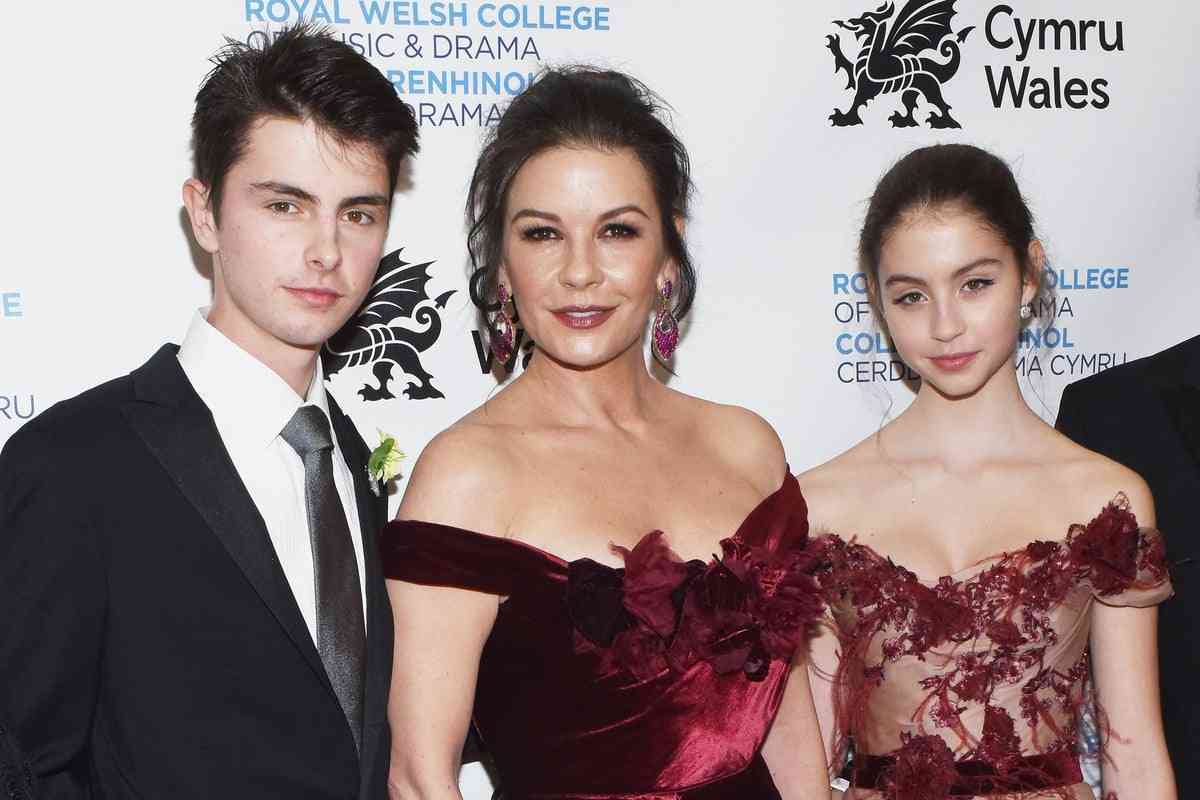
Catherine Zeta-Jones has joined a growing group of celebrity parents who have pushed back against the term “nepo baby,” calling the label “horrific” in a recent interview with The Sunday Times. The Oscar-winning actress argued that her children never chose to be born into a family surrounded by fame and wealth, comparing the criticism to simply describing a wealthy family as “rich” — an uncomfortable reality, but one that cannot be denied.
Catherine Zeta-Jones on the Reality of Inherited Advantage
Zeta-Jones, whose husband Michael Douglas is the son of legendary Hollywood actor Kirk Douglas, has two adult children, Dylan and Carys, who are beginning to explore careers in entertainment.
The actress acknowledges that growing up in a famous family can make it difficult for her children to establish independent identities. However, she maintains that both are “finding their own way in life” and should be allowed to pursue their careers on their own terms.
At the same time, the discussion around “nepo babies” is fundamentally about opportunity. Children of established actors, musicians, directors and other entertainment figures can have access to networks, industry knowledge and opportunities that are often unavailable to newcomers.
Kate Winslet’s Children Enter the Entertainment Industry
A similar situation can be seen in the career paths of Kate Winslet’s children.
Winslet’s daughter, Mia Threapleton, appeared alongside her mother in the drama I Am Ruth. Meanwhile, Winslet’s directorial debut, Goodbye June, was written by her son Joe Anders, whose father is acclaimed filmmaker Sam Mendes.
Winslet has said she was attracted to the script and felt compelled to direct the project. Nevertheless, the family connections naturally became part of the public discussion surrounding the work.
The debate illustrates why the “nepo baby” label can remain relevant even when the individuals involved are talented, hardworking and serious about their careers.
Some Stars Have Chosen to Embrace the Label
Not every second-generation celebrity has rejected the term. Some have approached it with humor or openly acknowledged the advantages that come with having famous parents.
Eve Hewson, the daughter of U2 frontman Bono, joked about being left off New York Magazine’s widely discussed 2022 “nepo baby” list while acknowledging that her parentage is an inseparable part of her public story.
Comedian Grace Campbell, daughter of political commentator Alastair Campbell, has also openly discussed the benefits of her family name. While she recognises that her background may have helped open certain doors, she maintains that opportunities do not automatically replace talent, work and performance.
Brooklyn Beckham and the Burden of a Famous Family
The experience of Brooklyn Beckham demonstrates another side of the debate.
As the eldest son of David and Victoria Beckham, Brooklyn has spent much of his public life under the shadow of his parents' enormous celebrity profiles. His personal life and career choices have frequently been discussed in relation to his family background.
His reported estrangement from his parents has added another dimension to the story, showing how being born into a famous family can create intense public scrutiny as well as provide opportunities.
For some celebrity children, the “nepo baby” label may therefore represent both an advantage and a burden.
Fame and Wealth Do Not Eliminate Personal Challenges
Having famous parents does not necessarily guarantee an easy life.
Michael Douglas’s eldest son, Cameron Douglas, served a prison sentence after pleading guilty to drug offences. His experience illustrates that wealth, fame and family connections cannot completely protect individuals from personal mistakes or difficult consequences.
Zeta-Jones has similarly emphasised that fame does not provide immunity from the challenges of ordinary life.
A Journalist’s Encounter With Celebrity Privilege
The wider debate is also reflected in personal experiences within the entertainment industry.
The writer recalls interviewing a young talent whose parents were a rock-star father and a supermodel mother. Although the youngster had been raised to treat people with courtesy, the interview ended abruptly when a photographer arrived, leaving the journalist surprised by the reaction.
The anecdote raises questions about how growing up surrounded by fame can influence expectations, behaviour and perceptions of professional environments.
When “Nepo Baby” Becomes Part of an Identity
The writer also reflects on their own daughter, whose parents include a professional musician and a writer.
The daughter jokes about being a “nepo baby” and understands that growing up around people working in the creative industries provides her with knowledge, contacts and familiarity with the world she may eventually enter.
In one revealing episode, the teenager became upset when her mother chose not to use her name in an article, fearing that the decision could hurt her future “nepo baby” prospects.
The moment illustrates how the label can become more than a criticism. For some young people, it can become part of how they understand their own identity and position within an industry.
Why the “Nepo Baby” Debate Continues
Acknowledging the advantages associated with having famous parents does not necessarily diminish the talent or achievements of the next generation. Instead, it recognises that family connections can provide access to opportunities that may be considerably harder for outsiders to obtain.
The debate ultimately touches on broader questions surrounding privilege, merit and access within Hollywood and the wider entertainment industry.
As more second-generation actors, musicians, directors and performers enter the spotlight, the conversation surrounding “nepo babies” is unlikely to disappear. Some may reject the label, others may embrace it, while others may treat it as a source of humor.
Regardless of how they respond, the discussion continues to highlight the complicated relationship between inherited privilege, individual talent and the opportunities available to those born into famous families.