







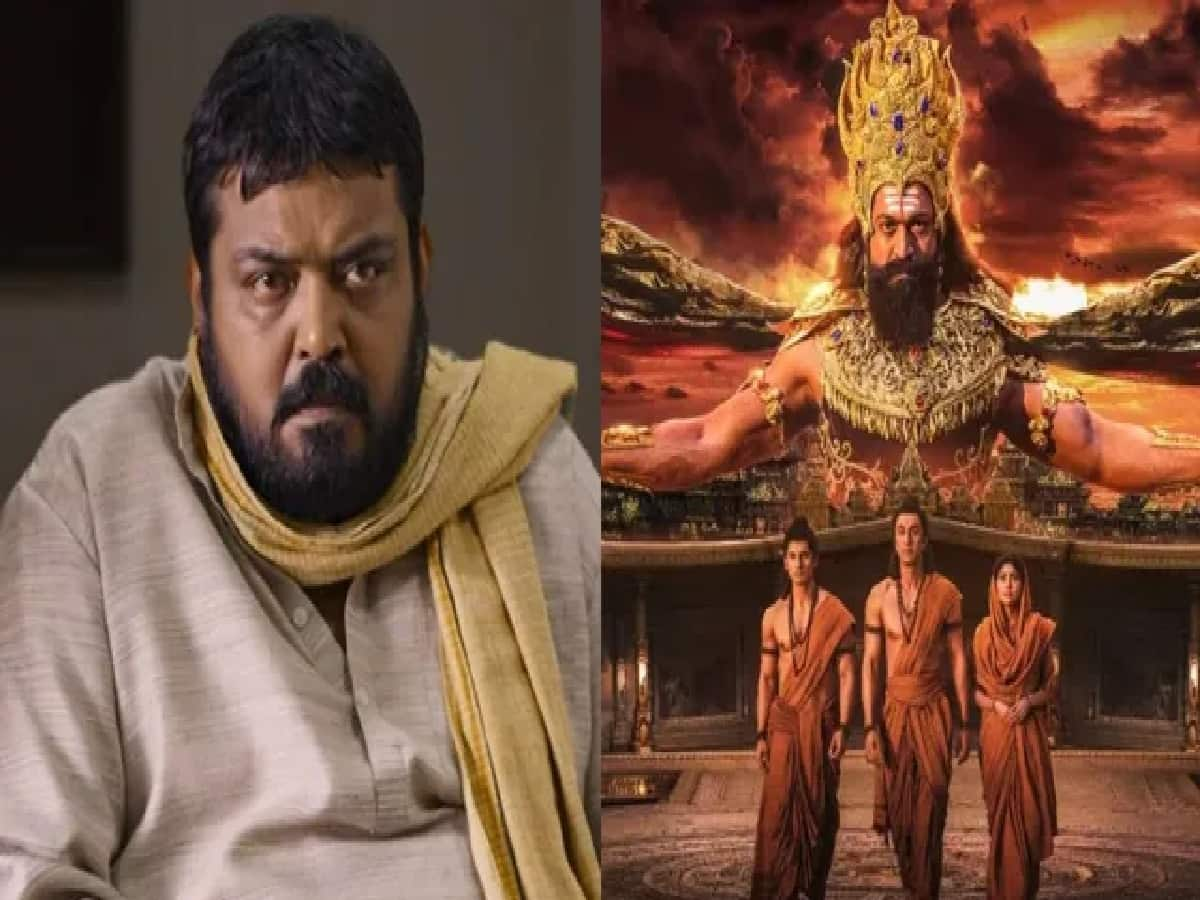
Faisal Malik Slams Critics Calling Ramayana VFX 'AI', Explains CGI
Actor Faisal Malik, who portrays the towering warrior Kumbhakaran in filmmaker Nitesh Tiwari's mythological epic Ramayana, has pushed back strongly against online trolls and commentators dismissing the film's visual effects as artificial intelligence (AI). Calling the big-budget spectacle a deeply technical, VFX-driven production rather than a conventional live-action shoot, Malik remarked that most critics casually labeling scenes as AI-generated fail to understand the fundamental craft separating computer-generated imagery (CGI) from automated AI tools.
Why Faisal Malik Defended the Artists Behind Ramayana's Visuals
Mounted on a reported ₹4,000 crore production canvas, Ramayana: Part One has drawn intense discussion on social media since its theatrical release, with a section of viewers comparing select visual sequences to AI-rendered imagery. Addressing those reactions in an interview with Hindustan Times, Faisal Malik—best known to audiences across Mumbai, Delhi, Lucknow, and Hindi heartland states for playing Prahlad Cha in Panchayat—defended the thousands of technicians and international visual-effects specialists who spent months building the film's world.
Malik emphasized that large-scale visual effects rely on painstaking human artistry rather than one-click generation:
-
Global artist collaboration: Thousands of Indian and international crew members worked simultaneously across specialized departments to design, animate, and refine individual frames.
-
Months of frame-by-frame refinement: Multiple teams collaborated for days and months on a single character and single sequence—adjusting scale, lighting, skin texture, and motion—before finalizing each shot.
-
CGI versus AI: As Malik bluntly observed, dismissing months of motion-capture and CGI engineering as "AI" overlooks the technical reality of modern visual-effects filmmaking.
Unlearning Traditional Acting and Shooting With Yash for Part 2
To bring Kumbhakaran's colossal stature to the big screen, Malik revealed that he had to unlearn conventional acting habits and undergo specialized technical training under VFX supervisors. Because Kumbhakaran is depicted as a giant demon warrior whose sheer physical scale defines his presence, cameras captured Malik's body movements, posture, and performance-capture markers rather than relying on conventional facial close-ups.
The actor also shared behind-the-scenes details about filming alongside Kannada superstar Yash, who plays Ravana, teasing pivotal sequences lined up for Ramayana: Part Two. While most of their portions were filmed on separate motion-control stages to match extreme height proportions, Malik recalled shooting the sequence in which Ravana walks across Kumbhakaran's palm to bless him—a scene meticulously synchronized around eye lines, facial angles, and micro-movements. Comparing the technical workflow to behind-the-scenes documentaries of Hollywood benchmarks like The Lord of the Rings and Avatar, Malik described the shoot as a once-in-a-lifetime experience unmatched in scale in Indian cinema.
Ramayana Crosses ₹1,000 Crore Net in India, Nears ₹1,800 Crore Worldwide
Despite polarized social media debates over its visual effects, Ramayana: Part One—starring Ranbir Kapoor as Lord Ram, Sai Pallavi as Sita, and Yash as Ravana—continues to post historic numbers at the domestic and global box office. According to trade tracker Sacnilk, the pan-India epic crossed the ₹1,000 crore net milestone in India on Day 23, taking its domestic net total to ₹1,000.55 crore (₹1,195.10 crore India gross) across Hindi, Kannada, Tamil, Malayalam, and Telugu versions.
| Box Office Metric (Through Day 23) | Collection Figure |
| India Net Collection (All Languages) | ₹1,000.55 crore |
| India Gross Collection | ₹1,195.10 crore |
| Overseas Gross Collection | ₹595.00 crore |
| Worldwide Gross Collection | ₹1,790.10 crore |
With overseas markets contributing ₹595 crore gross, Ramayana: Part One's cumulative worldwide gross reached ₹1,790.10 crore—closing in on the ₹1,800 crore mark in just 23 days. For Malik, seeing theater audiences across India record his entry sequence and flood social media reels has made the grueling technical process deeply rewarding.




