







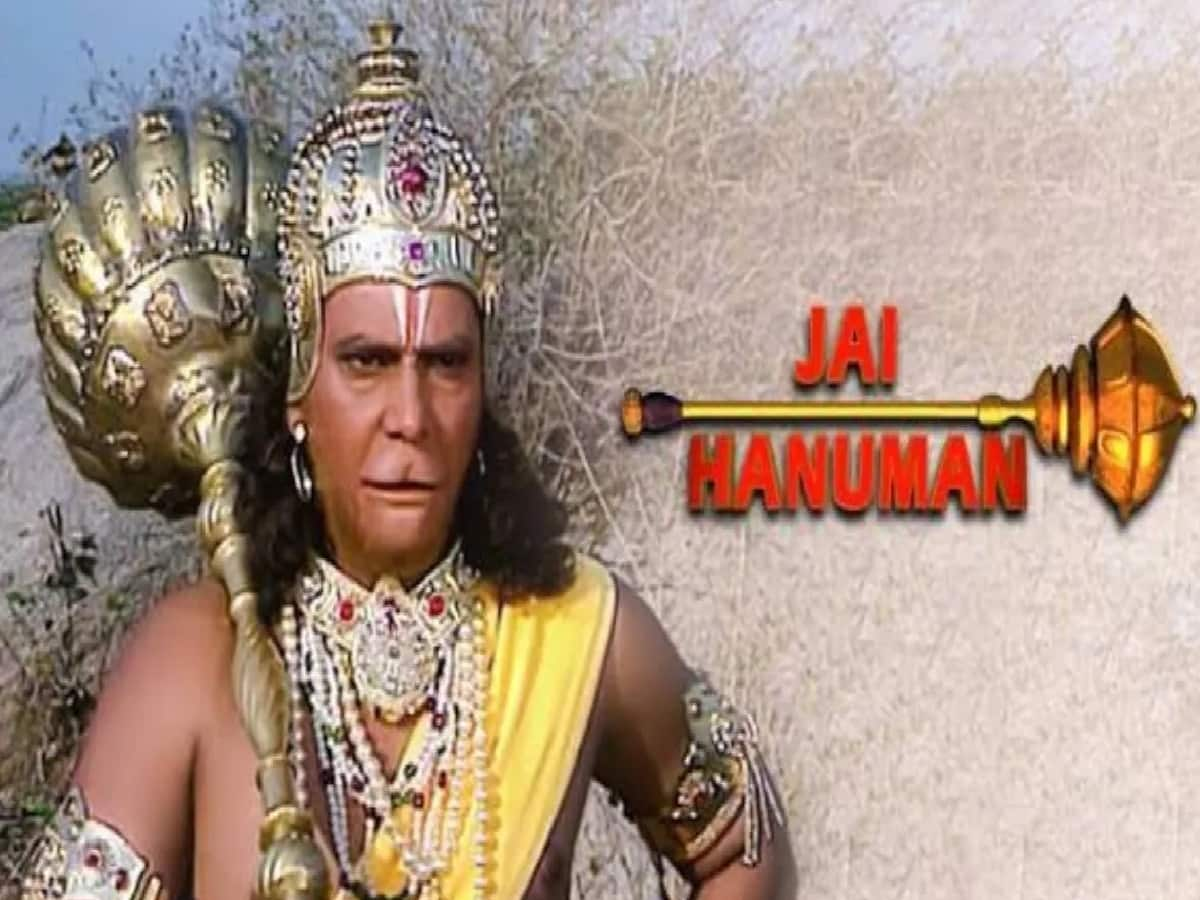
29 Years Ago, Sanjay Khan Made 'Jai Hanuman' With Irrfan Khan
Whenever conversations turn to the golden era of Indian mythological television, classics such as Ramanand Sagar’s Ramayan, B.R. Chopra’s Mahabharat, and Shri Krishna immediately dominate collective memory across households from New Delhi and Mumbai to Lucknow, Ayodhya, and Varanasi. Yet twenty-nine years ago, in 1997, another ambitious devotional series captivated millions of viewers every week on Doordarshan’s DD National: Jai Hanuman. Spanning 178 episodes, the landmark television saga brought the life, childhood exploits, and timeless devotion of Lord Hanuman to small screens nationwide. What makes this beloved late-1990s production truly extraordinary in the annals of Indian broadcasting is the remarkable spirit of artistic unity behind and in front of the camera. The series was conceptualized, produced, and directed by veteran Muslim filmmaker Sanjay Khan, featured Muslim actor Siraj Mustafa Khan in the revered role of Lord Ram, and showcased memorable early-career performances by late cinema icon Irrfan Khan as Maharishi Valmiki and actor-politician Ravi Kishan as Lord Krishna.
Sanjay Khan's Vision Behind DD National's 1997 Classic 'Jai Hanuman'
By the mid-1990s, actor-filmmaker Sanjay Khan had already earned acclaim for mounting grand historical television epics such as The Sword of Tipu Sultan and The Great Maratha. Turning his creative focus toward Indian mythology under his production banner Numero Uno International Limited, Khan launched Jai Hanuman on March 4, 1997, on state broadcaster DD National, where the show enjoyed an uninterrupted three-year run concluding on July 29, 2000. Written by Dr. Madhusudan Pathak and enriched by soulful, scripture-inspired compositions from legendary music maestro Ravindra Jain, the show quickly became staple family viewing across North, Central, and Western India.
Rather than treating the project as a routine television serial, Khan approached Jai Hanuman with cinematic scale, elaborate palace and forest sets, intricate period costumes, and disciplined Sanskrit-inflected Hindi dialogue. Even years after its original Doordarshan broadcast ended, the series retained a loyal following, prompting Sony Entertainment Television to re-telecast the show for a newer generation of viewers in 2008. At a time when television entertainment was transitioning from state-run programming to private satellite channels, Sanjay Khan’s stewardship stood out as a shining example of India’s syncretic cultural heritage, demonstrating how deep reverence for epic storytelling transcended religious boundaries.
Irrfan Khan as Maharishi Valmiki and Ravi Kishan as Lord Krishna
Looking back nearly three decades later, one of the most fascinating aspects of Jai Hanuman is its rich ensemble cast, which featured several performers years before they rose to nationwide and international stardom. Long before Irrfan Khan became one of global cinema’s most celebrated actors through acclaimed films such as Maqbool, The Namesake, Paan Singh Tomar, The Lunchbox, and Life of Pi, he honed his craft on Indian television. In Jai Hanuman, Irrfan portrayed Maharishi Valmiki, the revered sage who composed the original Sanskrit Ramayana. Bringing his signature quiet intensity, expressive eyes, and measured voice modulation to the role, Irrfan lent profound spiritual gravitas to the narrative framing of the epic.
Alongside Irrfan, Ravi Kishan—who later emerged as a towering superstar of Bhojpuri cinema, a familiar face in Hindi and South Indian films, and a Member of Parliament from Gorakhpur—appeared in the series as Lord Krishna, guiding the Pandavas during the Mahabharata segments of the storyline. At the center of the saga was Raj Premi, whose imposing physical stature and booming voice made him unforgettable in the titular role of Lord Hanuman, while also doubling as Lord Shiva—a rare distinction in Indian mythological television. Siraj Mustafa Khan brought serene dignity to Lord Ram, supported by Shilpa Mukherjee and Meenakshi Gupta as Sita, Manish Khanna as Lakshman, Kavin Dave as young Maruti, Rohitash Gaud as saint-poet Tulsidas, and Mukesh Khanna as King Bhagiratha.
Storyline of the 178-Episode Saga From Treta Yuga to Tulsidas
Unlike adaptations that confine themselves strictly to the war in Lanka, Jai Hanuman adopted an expansive multi-era structure tracing Hanuman’s divine journey across three cosmic ages—the Treta Yuga, Dvapara Yuga, and Kali Yuga. The early episodes chronicled the celestial circumstances leading to Hanuman’s birth to Mother Anjani and King Kesari, followed by his charming childhood adventures as young Maruti—including his famous leap toward the glowing sun, mistaking it for a ripe fruit—and his rigorous education in sacred scriptures, martial arts, and mystic powers under divine mentors such as Surya Dev.
As the narrative moved deeper into the Treta Yuga, the series depicted the rising tyranny of Lanka’s demon king Ravana (played by Anil Yadav), the incarnation of Lord Vishnu as Prince Ram of Ayodhya, and the pivotal meeting between Hanuman and Ram in Kishkindha. From leaping across the vast ocean in search of Mata Sita to burning golden Lanka, retrieving the life-saving Sanjeevani herb, and fighting alongside Ram and Lakshman against Ravana, Meghnad, and Kumbhakarna, every iconic chapter was dramatized in vivid detail. Subsequent arcs followed Hanuman into the Dvapara Yuga, where he blessed the Pandavas at Lord Krishna’s urging and adorned Arjuna’s chariot banner during the 18-day Kurukshetra war, before culminating in the Kali Yuga with his divine darshan to Goswami Tulsidas, inspiring the composition of the Ramcharitmanas.
Why 'Jai Hanuman' Still Resonates 29 Years Later on Indian Television
Twenty-nine years after its 1997 debut, Jai Hanuman remains far more than a nostalgic footnote from Doordarshan’s Sunday morning lineup. In an era dominated by high-budget visual effects and sprawling streaming franchises, audiences across Uttar Pradesh, Bihar, Delhi-NCR, and Maharashtra still revisit full episodes and archival clips online, drawn by Ravindra Jain’s timeless devotional melodies and the heartfelt sincerity of its performances. Above all, the enduring affection for Sanjay Khan’s Jai Hanuman endures as a testament to how great Indian storytelling—crafted with respect, dedication, and an extraordinary ensemble led by Raj Premi, Siraj Mustafa Khan, Ravi Kishan, and the late Irrfan Khan—continues to unite generations across time




