







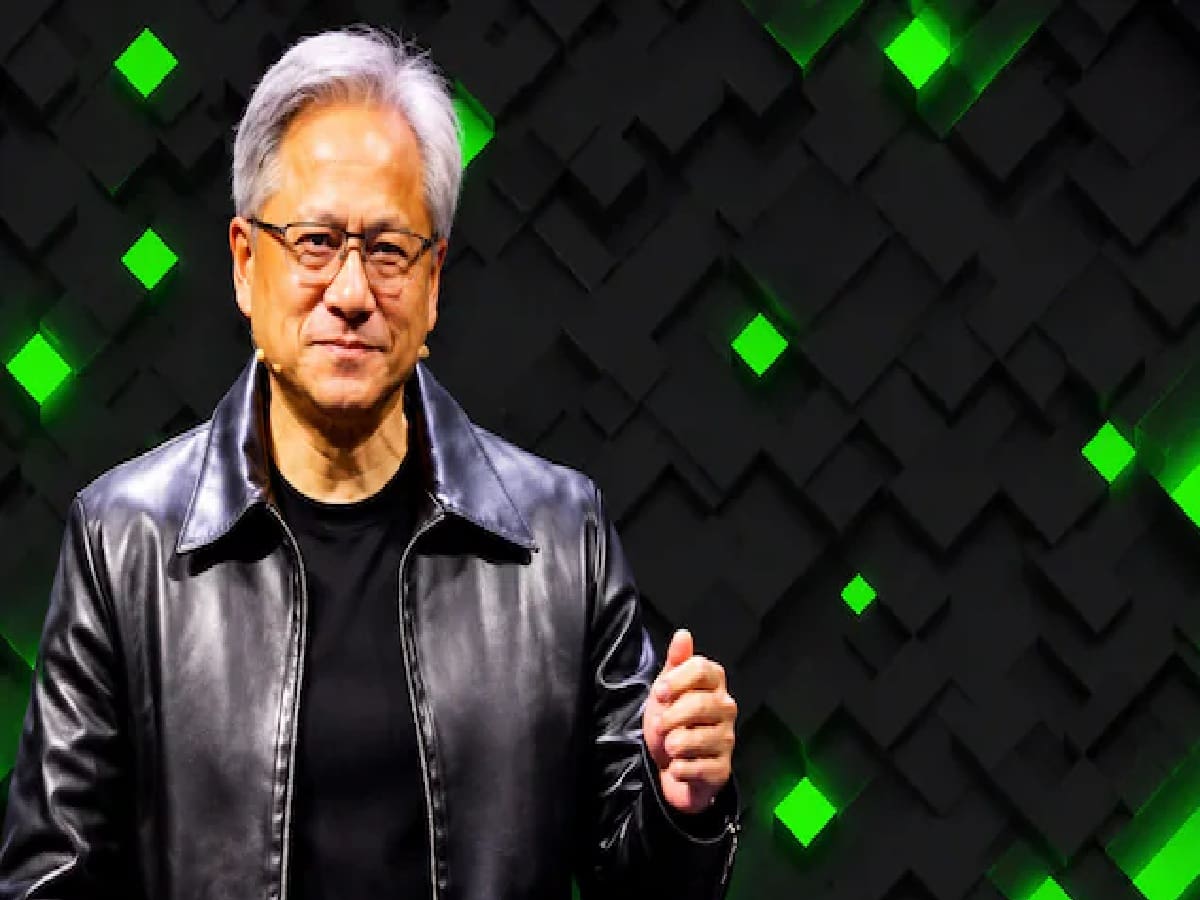
Nvidia Stock Plunges 8% on CEO Ouster Buzz; ₹161 Lakh Cr Lost
A sharp wave of market turbulence has swept across global technology equities after reports that Nvidia’s board of directors is weighing the removal of longtime Chief Executive Officer Jensen Huang triggered an after-hours stock plunge of more than 8 percent. Already under sustained selling pressure over growing Wall Street skepticism regarding returns on massive artificial intelligence data center investments, shares of the world’s dominant AI chipmaker have now suffered a staggering valuation wipeout. Having closed at $173.73 during regular US trading hours on Wednesday—roughly 29 percent below its October 52-week peak of $243.37—Nvidia’s stock tumbled an additional 8.6 percent to nearly $158.78 in extended trading. From its all-time valuation crest of roughly $5.6 trillion to $5.8 trillion last month, the Santa Clara-headquartered semiconductor giant has shed approximately $1.7 trillion, or more than ₹161 lakh crore, bringing its market capitalization down toward the $3.8 trillion mark. For global institutional funds and Indian retail investors across Mumbai, Bengaluru, Delhi-NCR, and Lucknow tracking US technology stocks, the sudden leadership crisis has injected unprecedented volatility into the heart of the global AI trade.
November Sell-Off Accelerates on CEO Removal Reports
Selling pressure in Nvidia intensified sharply in early November as governance and national security controversies collided with an already fragile sentiment in high-growth technology shares. The latest extended-hours rout followed a report by The Wall Street Journal stating that Nvidia’s board is preparing to consider removing Jensen Huang from the chief executive post, published just hours after The New York Times alleged that Huang had engaged in an undisclosed extramarital relationship with Kimberly Powell, Nvidia’s Vice President of Healthcare, who reports directly to him. Those disclosures arrived on the heels of an independent board investigation and federal scrutiny into Huang’s personal relationship with Alice Huang, a former executive at Singapore-based Megaspeed International suspected by US intelligence officials of ties to China’s Ministry of State Security amid probes into restricted AI chip shipments.
While Nvidia’s board has not formally announced any leadership change, the convergence of personal conduct controversies and geopolitical scrutiny has fundamentally altered how markets value the company. For over two years, Nvidia’s share price moved almost exclusively in tandem with surging artificial intelligence capital expenditure by cloud hyperscalers. Now, institutional traders are forced to price in acute executive instability, regulatory inquiries in Washington, and potential breaches of internal corporate governance standards, leaving the stock vulnerable to headline-driven swings regardless of immediate chip demand.
November 17 Quarterly Results: A Make-or-Break Moment for AI
All eyes on Wall Street and global financial hubs are now fixed on Tuesday, November 17, 2026, when Nvidia is scheduled to report its third-quarter financial results for fiscal year 2027. Market strategists describe the upcoming earnings release as one of the most consequential corporate events of the year for global equities. Beyond headline revenue and earnings-per-share figures, institutional investors will scrutinize forward guidance on data center infrastructure demand, production ramp-ups for next-generation AI processors and server systems, gross profit margin durability, and any commentary from the board regarding executive leadership stability.
Despite the fierce November drawdown that has erased ₹161 lakh crore in shareholder wealth, sell-side Wall Street analysts remain overwhelmingly constructive on Nvidia’s long-term earnings power. According to Bloomberg consensus data compiled as of November 11, 76 analysts tracking the semiconductor bellwether maintain a "Buy" recommendation on the stock, compared to just 3 "Hold" ratings and zero sell calls. Analyst 12-month price targets span from a conservative floor of $194—still comfortably above current trading levels—to an aggressive high of $515, reflecting widespread conviction among equity researchers that Nvidia’s technological moat in accelerated computing remains intact if governance headwinds can be contained.
The Jensen Huang Factor: Why Succession Risk Weighs on Wall Street
The intensity of the market’s reaction to ouster rumors underscores just how deeply Nvidia’s corporate identity is intertwined with Jensen Huang. Since co-founding the company in 1993, Huang has served as Nvidia’s sole chief executive for 33 years, steering it from a specialized PC graphics card designer into the indispensable foundational engine of modern generative artificial intelligence. According to regulatory filings and market reports, Huang holds approximately 3.6 percent of Nvidia’s equity—including shares managed through family trusts—while maintaining an unusually flat organizational structure in which dozens of senior engineering and business executives report directly to him.
Because Nvidia lacks an obvious internal heir apparent, institutional investors fear that an abrupt departure by Huang could disrupt product roadmaps, weaken deep commercial ties with major cloud customers, and complicate delicate diplomatic navigation in Washington and Taipei. Market observers have also raised a provocative strategic concern: should Huang be forced out by the board, nothing would necessarily prevent one of the semiconductor industry’s most driven founders from launching a new venture in the future, potentially turning Nvidia’s greatest architect into a formidable competitor.
Strong Business Fundamentals Amid Market Volatility
Beneath the storm of boardroom speculation and valuation compression, Nvidia’s underlying operational metrics continue to demonstrate extraordinary scale. In the second quarter of fiscal 2027, the company’s consolidated revenue surged 106 percent year-on-year to $96.2 billion, propelled by its flagship Data Center division, where quarterly revenue jumped 117 percent to $89 billion. Ahead of next week’s report, Nvidia management had projected third-quarter revenue of approximately $108 billion, while Wall Street consensus estimates stand near $108.8 billion to $109 billion. Whether those powerhouse numbers can arrest the stock’s slide on November 17 will depend on whether Nvidia’s leadership can reassure global investors that its strategic helm remains steady.




