







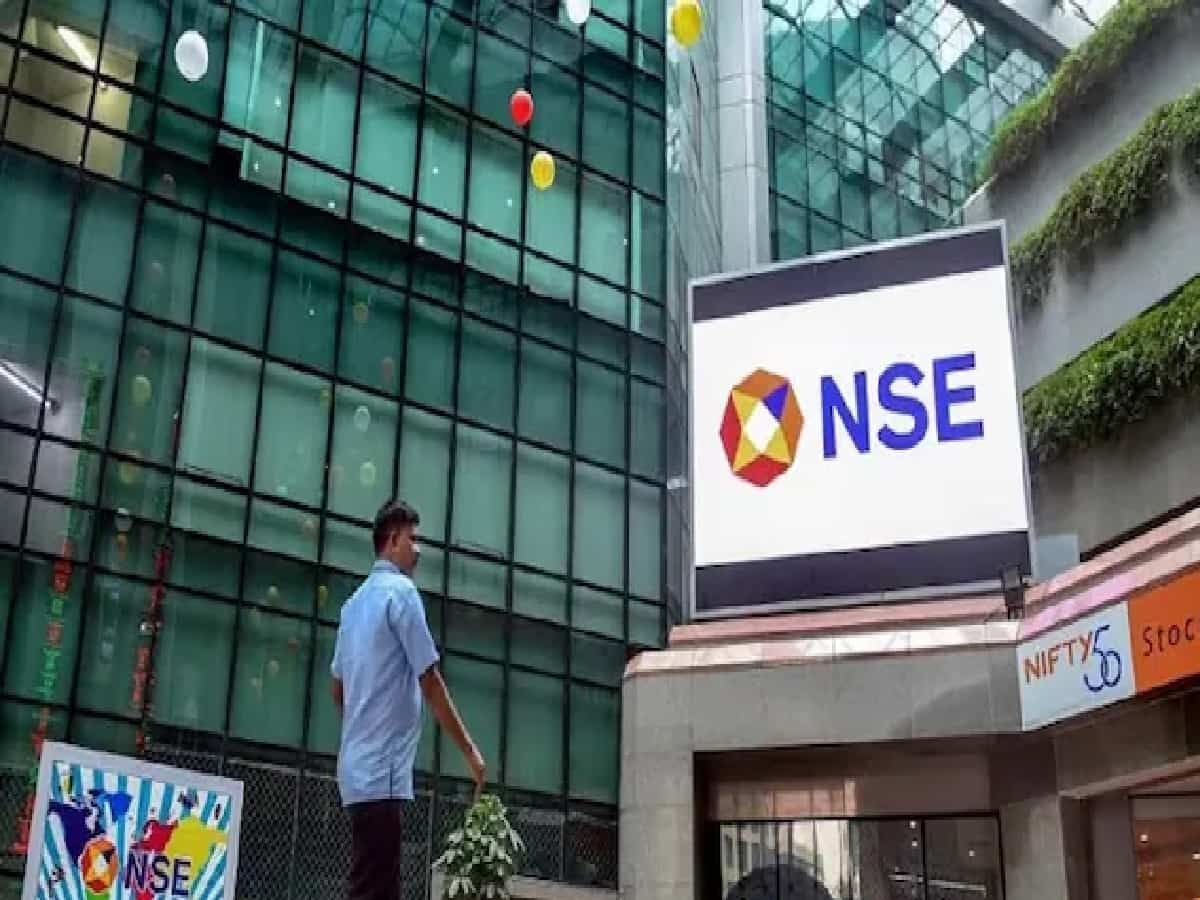
NSE Surges 36%, BSE 21% in a Month: HSBC Explains Rally & Next Targets
Exchange stocks have emerged as the undisputed center of attention on Dalal Street over the past month, propelling shares of both the National Stock Exchange (NSE) and BSE Ltd to remarkable gains and sparking intense debate across trading floors, business television, and retail investor forums. Highlighted across equity and institutional research desks on Thursday, November 26, 2026, NSE shares opened firmly at ₹2,320.00 against the previous session's close of ₹2,317.65 and quickly powered to a fresh all-time high of ₹2,400—capping an 8 percent weekly surge and a 36 percent one-month rally that vaulted NSE's market capitalization to ₹5,87,478 crore, placing it in the ninth spot among India's top 10 most valuable listed companies. Simultaneously, BSE shares opened with strong momentum at ₹3,812.00 against Wednesday's closing level of ₹3,775.20 and climbed to ₹3,935.00 by 10:30 AM, extending their weekly gain to roughly 4 percent and one-month advance to 21 percent, taking BSE's market valuation to ₹1,59,677 crore and bringing the counter within striking distance of its all-time record high of ₹4,446.80. Stepping in to decode what is fueling this powerful re-rating—and which exchange stock offers superior upside from current levels—global brokerage HSBC released a comprehensive sector report explaining how rising retail investor participation and healthy market volatility directly expand exchange transaction revenues, while diverging sharply on valuation: assigning a Hold rating on NSE with a target price of ₹2,300, and initiating a Buy rating on BSE with a target price of ₹4,500 across Mumbai, New Delhi, Bengaluru, Lucknow, Hyderabad, Chennai, and Ahmedabad.
NSE vs BSE Share Rally & HSBC Target Prices: Complete Comparison
To bring together the exact November 26, 2026 share prices, weekly and monthly returns, market capitalizations, and shareholding patterns of NSE and BSE, why HSBC issued a Hold rating on NSE despite its dominant market franchise, and how faster medium-term profit growth underpins HSBC's ₹4,500 Buy target on BSE, the tables below organize all verified market and brokerage details:
Side-by-Side Market & Shareholding Snapshot: NSE vs. BSE (Nov 26, 2026)
| Parameter | National Stock Exchange (NSE) | BSE Ltd |
| Previous Session Close (Nov 25, 2026) | ₹2,317.65 | ₹3,775.20 |
| Thursday Open & Morning Price (Nov 26, 2026) | Opened at ₹2,320.00; surged to a new all-time high of ₹2,400.00. | Opened at ₹3,812.00; climbed to ₹3,935.00 by 10:30 AM. |
| All-Time High / Lifetime Range | All-Time High: ₹2,400.00 (set on Nov 26, 2026). | All-Time High: ₹4,446.80; All-Time Low: ₹30.56. |
| 1-Week & 1-Month Return | +8% in 1 week | +36% in 1 month |
| Market Capitalization & Ranking | ₹5,87,478 crore — ranked 9th among India's top 10 most valuable companies. | ₹1,59,677 crore — strong mid-to-large cap capital-market compounder. |
| Shareholding Pattern Breakup | DIIs (Mutual Funds & Insurers): ~28%, Public / General Investors: ~26%, FIIs: ~25%. | Public / Retail Investors: ~38%, DIIs: ~24%, FIIs: ~21% (notably higher retail ownership than NSE). |
| HSBC Brokerage Rating & Target Price | Hold | Target Price: ₹2,300 |
Decoding HSBC's Report: Why Hold on NSE and Buy on BSE
| Analytical Pillar | HSBC's Assessment on NSE | HSBC's Assessment on BSE |
| Industry Tailwinds (Volume & Volatility) | Benefits directly from growing equity culture, rising demat additions, and heightened market volatility—since every spike in trading turnover generates higher transaction fee revenue. | Shares the exact same structural industry tailwinds across cash equities, derivatives, mutual fund distribution, and listing services. |
| Competitive Position ('Franchise Strength') | Possesses an entrenched, dominant market franchise with deep liquidity pools and unmatched market share across Indian capital markets. | Operates on a smaller revenue and profit base than NSE, positioning it as a high-operating-leverage challenger. |
| Valuation vs. Earnings Trajectory | Following a 36% one-month jump to ₹2,400, current share prices already bake in strong business fundamentals, leaving limited near-term valuation headroom above HSBC's ₹2,300 target. | Expected to deliver faster percentage growth in Profit After Tax (PAT) over the medium term as new revenue streams scale, justifying HSBC's Buy call and ₹4,500 target (~14.6% above ₹3,935). |
Why Market Volatility and Retail Flows Are Powering Exchange Stocks
Market specialists across Mumbai, New Delhi, Bengaluru, and Lucknow note that stock exchanges enjoy one of the cleanest business models in financial services: unlike banks or brokerages that carry credit or balance-sheet risk, exchanges earn transaction charges on every trade executed on their platforms. As HSBC highlighted, periods of active market rotation and volatility—combined with rising participation from domestic institutional investors (DIIs), foreign institutional investors (FIIs), and retail traders—translate directly into higher clearing and transaction volumes for both NSE and BSE.
Key Takeaways for Retail & Long-Term Investors After the 21%–36% Surge
While HSBC's ₹4,500 target on BSE and ₹2,300 Hold benchmark on NSE provide a clear institutional roadmap, market analysts remind investors across Mumbai, New Delhi, Bengaluru, Lucknow, Hyderabad, and Chennai that exchange stocks remain sensitive to SEBI regulatory changes in derivatives, weekly-expiry volumes, and quarterly PAT delivery. After gaining 36 percent and 21 percent in a single month, near-term consolidation or profit-taking remains natural even when long-term structural fundamentals stay intact.




