Jindal Supreme IPO Opens Today: ₹125-Cr Issue at ₹88-₹93 Price Band
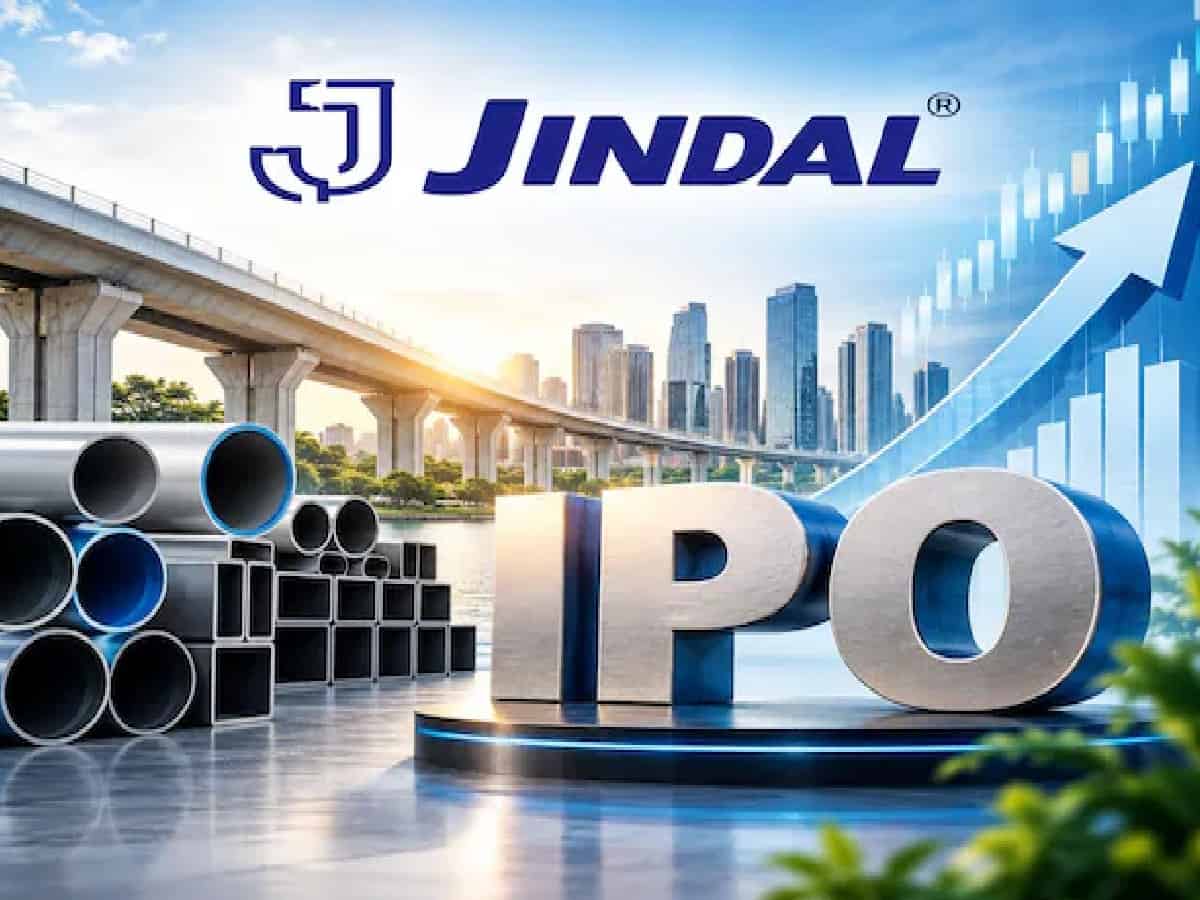
The primary market opened on Wednesday, September 16, 2026, with the launch of the initial public offering (IPO) of Jindal Supreme (India) Limited, an established manufacturer specializing in mild steel pipes, galvanized tubes, tubular poles, and highway crash barriers. Through this public market debut, the company aims to raise an aggregate of ₹125 crore within a structured price corridor of ₹88 to ₹93 per equity share. The three-day subscription window closes on Friday, September 18, 2026, pegging the firm's post-issue market capitalization between ₹449 crore and ₹475 crore at the defined price thresholds. Offering early strategic guidance, domestic brokerage firm Religare Broking has issued a "Subscribe - Long Term" rating on the issue, citing favorable entry-level valuations compared to industry peers, healthy operating efficiency, and long-term tailwinds across India's domestic infrastructure landscape.
Issue Structure, Lot Size, and Reservation Quotas Explained
Operating under standard book-building mechanisms where final allotment prices are determined through market discovery, the ₹125-crore offering is structured into two core funding components: a fresh equity issue worth ₹100 crore alongside an Offer for Sale (OFS) of ₹25 crore by offloading promoter shareholders. The capital accrued from the fresh component will flow directly into the corporate treasury to fund operational expansion, capacity upgrades, and working capital needs, while the OFS proceeds will be disbursed straight to selling stakeholders. Retail investors can place bids in minimum market lots of 161 shares, requiring an initial outlay of ₹14,973 per lot at the cut-off ceiling of ₹93. In terms of institutional allocations, 50 percent of the net offer is strictly reserved for Qualified Institutional Buyers (QIBs), 35 percent is allocated for retail individual bidders, and the remaining 15 percent is ring-fenced for Non-Institutional Investors (NIIs).
Five Decades of Industry Track Record Aligned With Infrastructure Expansion
Incepted in March 1974, Jindal Supreme brings more than five decades of industrial domain expertise in manufacturing structural steel tubing, galvanized iron (GI) utility poles, and high-tensile metal beam crash barriers engineered to absorb highway impact forces and enhance transit safety along major traffic corridors. Operating out of a centralized production plant located in Hisar, Haryana, the enterprise maintains an active marketing channel of 53 authorized distributors backed by 242 permanent personnel as of June 2026. The company’s long-term commercial upside remains tied to the accelerating pace of public capital expenditures across dedicated freight corridors, metro rail extensions, smart urban centers, interstate highway upgrades, the Jal Jeevan Mission, and regional city gas distribution networks. Management intends to deploy newly raised capital to boost plant utilization rates, expand the footprint of retail dealerships across underpenetrated zones, and enhance production efficiencies.
Financial Performance Breakdown: Operating Margins Expand While Net Profit Slips
A close examination of audited corporate balance sheets reveals consistent top-line expansion, with gross sales revenues advancing by roughly 15 percent from ₹586.40 crore in FY 2024-25 to ₹675.39 crore in FY 2025-26. Operating profitability displayed solid momentum as EBITDA jumped from ₹25.92 crore to ₹41.63 crore, driving a noticeable expansion in EBITDA margin from 4.42 percent to 6.16 percent. However, higher financing charges and depreciation burdens compressed bottom-line profitability, causing net profit (PAT) to slide from ₹24.27 crore down to ₹22.53 crore, pulling the PAT margin down from 4.01 percent to 3.33 percent. Return ratios stood firm with Return on Equity (ROE) pegged at 26.28 percent and Return on Capital Employed (ROCE) recorded at 16.78 percent, while the debt-to-equity ratio improved modestly from 1.28 times to 1.24 times. Valuations remain comparatively modest, with the price-to-earnings (P/E) multiple calculated at 14.33 times at the upper end of the price band, representing a visible discount relative to listed steel pipe peers.
Single-Plant Exposure and Raw Material Headwinds Pose Structural Vulnerabilities
Despite positive brokerage recommendations, potential investors need to carefully evaluate key operational bottlenecks outlined in the draft red herring prospectus. The company's primary operational risk stems from absolute single-facility dependency, as its entire fabrication apparatus is concentrated at the Hisar facility in Haryana, leaving supply fulfillment highly vulnerable to local industrial strikes, plant machinery outages, or regional logistic blockades. Additionally, the company relies heavily on a small group of primary material vendors for hot-rolled (HR) and mild steel coils, making operational profit margins susceptible to raw material cost spikes and volatile zinc pricing for galvanizing operations. The business must also navigate intense market competition from significantly larger, multi-locational pipe conglomerates operating across northern and western industrial belts.